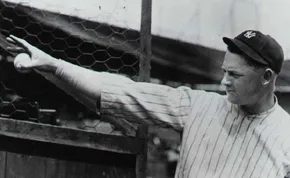
Babe Ruth didn’t even make it into New York City when the trade finally went through. He bypassed the Big Apple entirely, heading straight to a farm outside Boston to get his wife, Helen, settled. It wasn’t until she was safe that he got his first real taste of the city.
The date was February 28, 1920. Ruth met the rest of the Yankees contingent at Pennsylvania Station just minutes before their sleeper train departed for Florida. The sight was jarring for him. Hordes of fans were waiting. Not just a few curious onlookers, but a genuine crush of people begging for handshakes and autographs. It was an uncommon sight away from the ballpark back then.
Ruth put down his golf clubs. He was happy. He was surprised. He obliged.
That moment was a pivot point. For the rest of his career, and especially during his New York years, he learned to share his public time with admirers. Most ballplayers hated it. They viewed fan interaction as a chore. Ruth? He received more requests than anyone else, yet he was generous with his time. He had a natural warmth toward fans, likely stemming from a neglected and unsatisfying upbringing. He wanted to see people happy.
Children got the most attention. No matter how turbulent his life became, the Babe always made time for kids. This generosity fueled his growing legend.
Getting to Know the Yankees
His first days with the new team were a stark contrast to his rookie year in Boston six years prior. Frank “Ping” Bodie, the friendly center fielder, introduced him to everyone. Ruth already knew most of them, but introductions never mattered much to him.
He had a terrible time with names. It wasn’t conceit. It was just that he encountered so many people who were glad to meet him that formalities felt unnecessary. Teammates were no exception.
Years later, players claimed he never knew their real names. The most famous case involved Waite Hoyt. Hoyt was a Hall of Fame pitcher who played with Ruth for over a decade. In 1930, Hoyt was traded to the Tigers. When Ruth approached him, he stuck out his hand and said, “Goodbye, Walter.”
Hoyt never let on he was bothered. He spent the rest of his life retelling the story. It wasn’t an insult. It was just how Ruth operated.
When the train headed to Jacksonville, Ruth got his first $5 in expense money. He immediately urged a card game to start. He also had plenty of his “Babe Ruth Cigars” to hand out. He had a sideline in a cigar factory back in Boston, and he wasn’t shy about promoting it.
Starting Spring Training
In Florida, Ruth went back to his old clowning ways. The response was different this time.
Early in camp, Ruth was working out at third base. Bodie cut in front of him for a grounder. Ruth yelled in mock protest. He picked up his 5′ 8″, 195-pound roommate, turned him upside down, plopped him on the grass, and sat on him.
In Boston, that kind of stunt would have ended in angry words or fisticuffs, like the incident with Joe Wood. Here, there was only laughter.
The media presence was unprecedented. Before, one sportswriter might dispatch stories to several papers. Now, thirteen reporters flocked to Florida to cover the Yankees. It was likely the most coverage one team had ever received in training camp.
Legendary scribes like Fred Lieb, Damon Runyon, and Sid Mercer were cranking out copy before games even started. Headlines screamed about “Ruth Complains of Indigestion” and “Ruth’s Big Bats Arrive in Camp.” Even a simple story about his conquests at the dinner table became a feature. Readers ate it up.
The Jacksonville Chamber of Commerce publicized every exhibition game. They marketed the games as chances to see baseball’s newest star. The Yankees weren’t the draw themselves. They had never won a pennant. Despite acquiring stars from Red Sox owner Harry Frazee, they weren’t the regal, imposing club they would soon become. Ruth was the attraction. Crowds were record-breaking.
But Ruth struggled at first. He started slowly. He struck out multiple times in a game against the Brooklyn Dodgers. Spiteful comments and headlines in the East Coast papers got to him.
One day, a fan in the stands wouldn’t stop riding him. Ruth snapped. He climbed into the seats to pursue the insulter. The fan pulled out a knife that looked “about a foot long.” Someone intervened before violence broke out.
“I believe it was the very next day that I got going,” Ruth said later.
On April 1, 1920, he hit a mammoth home run. From then on, he was one of the hottest hitters in camp. The transition was complete. The world was watching. And he was finally ready to play.
Babe Ruth’s off-field antics moved at a speed that terrified Yankees manager Miller Huggins.
Ruth’s reputation for mischief wasn’t just growing. It was exploding. And Bodie? Bodie got used to it. He became the unofficial porter for both his own luggage and the Babe’s. Every time the train rolled into a new town, Bodie was the one dragging two suitcases up the stairs.
The moment the wheels stopped spinning, Ruth was gone. He scouted the town like a predator. Teammates stopped being surprised. This ritual became the norm for the next several seasons.
One night in Miami, the chaos peaked. After a game, Ruth hung out with a mix of players, reporters, and even Colonel Huston. They stayed out all night. When morning came, Bodie couldn’t walk. Reportedly, he needed three teammates to carry him to the train.
Ruth wasn’t faring much better physically. Later, he admitted his reflexes were shot that day. He chased a fly ball straight into a palm tree. Hard. The impact knocked him cold.
But he bounced back. And around this time, a quote emerged that perfectly captured the chaos of living with the wild young star.
Historians might argue over who actually said it. Bodie? Another teammate? Who cares. The story stuck. When asked what it was like to share quarters with Ruth, Bodie gave the answer that history would remember:
“I don’t room with Ruth. I room with his suitcase.”
Bodie wouldn’t be rooming with anyone for much longer, though. He jumped the team in March. Personal problems. Gone.
Then Chick Fewster, another outfielder, got hit in the head by a pitch. He headed north to Baltimore for surgery. The season was basically over for him.
But the Babe was just getting started.
All eyes turned to his work behind the plate. The power was obvious. The discipline was questionable. The legend was taking shape.
What happened next? The at-bat. That’s where the real magic happened. And it changed baseball forever.
For more on the evolution of the game:
-
Baseball
-
Minor League Baseball
-
Baseball Hall of Fame