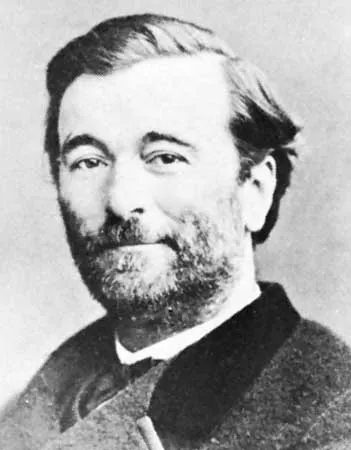
Paul Bert didn’t just study the human body; he mapped the limits of where humans could survive. Born in Auxerre, France, in 1833, he lived a life packed into just 53 years before dying in Hanoi on November 11, 1886. He wore many hats: physiologist, politician, diplomat. But his legacy rests on a single, foundational contribution. Bert is the founder of modern aerospace medicine.
His work bridged the gap between the ground we walk on and the void above us. He proved that the illness afflicting animals at high altitudes isn’t magic. It’s simple chemistry. The sparse atmosphere holds less oxygen. When you go high, your body starves. This insight made the exploration of space and the crushing depths of the ocean possible.
The High-Altitude Problem
While serving as a professor of physiology at the Sorbonne from 1869 until his death in 1886, Bert ran experiments that changed everything. He looked at what happens when pressure drops.
He found that high-altitude sickness is caused mainly by the low oxygen content of the thin air. Not a mystical “thin air” curse. Just a lack of O2 molecules hitting your lungs. This was a definitive answer to a question that had plagued aviators and mountaineers for years.
The Bends and Nitrogen
Bert also cracked the code on decompression sickness. Divers know this agony. They call it “the bends.” It happens when they rise too quickly from deep underwater.
Bert demonstrated the mechanism. High external pressure forces large quantities of atmospheric nitrogen to dissolve in the blood. It’s like opening a soda bottle. Slowly, it fizzes. Quickly, it explodes.
During rapid decompression, that dissolved nitrogen forms gas bubbles. These bubbles obstruct capillaries. The flow stops. Pain follows. Damage follows.
A Book That Changed Warfare
His findings were compiled in a classic text: La Pression barométrique, recherches de physiologie expérimentale (1878). In English, it appeared as Barometric Pressure: Researches in Experimental Physiology in 1943.
The 1878 version laid the groundwork. The 1943 English translation proved its worth during World War II. Aviation medicine relied on his data. Pilots flying at high altitudes survived because of his experiments.
Bert’s research into the effects of air pressure on the body helped make possible the exploration of space and the ocean depths.
Why It Matters Now
We still use his models. The same principles apply to pressurized cabins in commercial jets. To hyperbaric oxygen chambers. To the suits worn by astronauts.
Bert showed that pressure isn’t just a number on a gauge. It’s a force that dictates how gases behave in our blood. Ignore it, and your capillaries clog. Respect it, and you can go anywhere.
The question isn’t whether we can reach the edge of space. It’s whether we understand the blood in our veins well enough to survive the journey. Bert answered the first part. The rest is still unfolding.
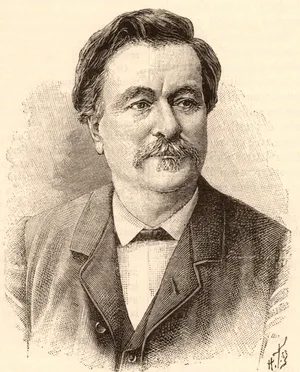

Reforming Colonial Rule in Annam and Tonkin
The shift in French administration under Paul Bert marked a distinct pivot from the rigid military control that had defined earlier years. Appointed governor general of Annam and Tonkin in 1886, Bert brought a background steeped in secular politics and educational reform to the complex landscape of French Indochina. His time in office was brief—cut short by his death later that year—but the structural changes he implemented left a lasting imprint on how France managed its colonial holdings in the region.
A Different Approach to Governance
Bert’s tenure was notable for what he chose not to do. Rather than imposing direct rule through the barracks, he sought to liberalize the colonial framework. This meant stepping back the influence of the military in civil affairs, a move that was both controversial and necessary for long-term stability. By reducing the visibility of soldiers in daily governance, Bert aimed to create a political environment where local structures could function with greater autonomy.
He specifically worked to increase the administrative role of the Vietnamese court. This was not merely a symbolic gesture. By empowering traditional Vietnamese authorities to handle certain civil matters, Bert hoped to ease the tensions that had been building between the colonizers and the local population. The strategy was pragmatic: using existing hierarchies could reduce resistance and provide a smoother transition for French policy implementation.
The Legacy of His Short Tenure
Despite serving for only a few months, Bert’s impact was considerable. His reforms served as a model for later French administrators who recognized that blunt instruments of power were less effective than nuanced political engagement. The liberalization he initiated suggested a path where colonial rule could evolve from occupation to a more integrated, albeit unequal, partnership.
“Bert’s reforms eased tensions and established a blueprint for future administration, proving that political inclusion could be a tool of colonial stability.”
This approach stood in contrast to the hardline policies favored by many of his contemporaries. Bert’s background as an anticlerical leftist and former minister of education informed his belief that education and civil administration were more potent tools for integration than force. While his specific policies were tested in the crucible of Annam and Tonkin, the broader implications of his method influenced how France approached its colonial responsibilities in Indochina for decades to come.
The question remains whether such liberalization was a genuine attempt at partnership or simply a more efficient method of control. The historical record suggests it was the latter, but one that required a level of sophistication in governance that earlier administrators had lacked. Bert’s brief stint highlighted the potential for a different kind of colonial relationship, one based on administrative cooperation rather than pure domination.