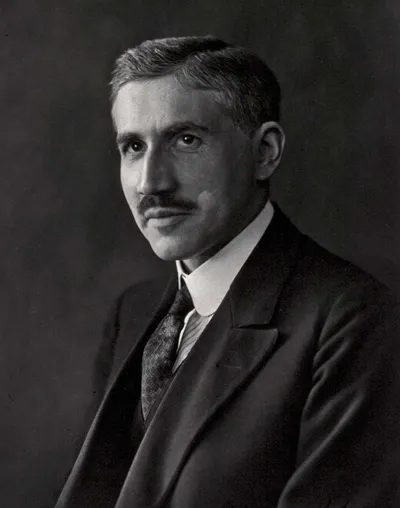
Otto Meyerhof changed how we understand the body’s energy systems. Born in Hanover, Germany, in 1884, he became one of the most significant figures in 20th-century biochemistry. His work on muscle metabolism remains a foundational pillar in medicine, even decades after his death.
He shared the 1922 Nobel Prize for Physiology or Medicine with Archibald V. Hill. The prize recognized their groundbreaking research into the chemical reactions that drive muscle activity. Meyerhof’s specific contribution focused on the glycogen-lactic acid cycle. This pathway explains how muscles convert stored fuel into energy during exertion. While later scientists have refined and revised these details, the core mechanism Meyerhof identified is still a basic tenet of exercise physiology.
A Life in Science and Exile
Meyerhof’s path to scientific prominence began with rigorous academic training. He earned his M.D. from the University of Heidelberg in 1909. Following graduation, he took positions in physiology and physical chemistry at Kiel and other German universities. By 1929, he had risen to head the department of physiology at the Kaiser Wilhelm Institute for Medical Research in Heidelberg. This institute is now known as the Max Planck Institute.
His career took a sharp turn with the rise of the Nazi regime. As a Jew, Meyerhof faced increasing persecution. He left Germany in 1938, spending two years in Paris before settling in the United States. There, he served as a research professor at the University of Pennsylvania. He continued to lecture widely across England and the U.S., sharing his expertise on chemical dynamics.
Enduring Legacy
Meyerhof was not just a lab researcher. He was also a writer and educator. In 1924, he published The Chemical Dynamics of Life Phenomena. The book helped bridge the gap between complex biochemistry and broader biological understanding.
His discovery of the glycogen-lactic acid cycle answered a fundamental question: How do muscles generate energy without immediate oxygen? The answer lay in the breakdown of glycogen into lactic acid. This process allowed for short bursts of intense activity. It was a critical insight that helped explain muscular fatigue and recovery.
Today, when athletes push their limits or doctors treat metabolic disorders, they rely on principles established by Meyerhof. His work did not just describe what happens in the body. It explained why. The specific chemical pathways he mapped out remain essential for understanding human movement.
“His work on the glycogen-lactic acid cycle remains a basic contribution to the understanding of muscular action.”
Meyerhof died in Philadelphia in 1951. But the chemical dance he helped choreograph continues to play out in every muscle fiber of every person who moves.