


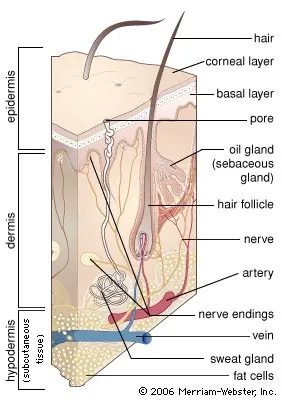
Your skin is not just a wrapper. It is a complex, living shield. It protects you from the outside world and catches every touch, temperature shift, and threat. Structurally, it is built in layers. The epidermis sits on top. Below it lies the thicker dermis. Each part has a distinct job.
The Epidermis: The Frontline Defense
The outer layer is the epidermis. It is packed with cells that do more than just sit there. Some are part of your immune system, ready to fight off invaders. Others are sensory receptors, sending signals to your brain. Then there are the pigment cells, which determine your tone, and the keratin-producing cells.
These keratin cells do something interesting. They harden. They migrate upward. By the time they reach the surface, they are dead. They form a dry, horny layer. This layer constantly sloughs off. You lose millions of these cells every day. It is a renewable resource. A fresh barrier is always being built underneath.
The Dermis: Structure and Sensation
Beneath the epidermis is the dermis. This is where the real mechanical strength comes from. It contains sensory nerves. It holds blood vessels. These are embedded in connective tissue.
Two fibers give this layer its character: collagen and elastin. Collagen provides toughness. Elastin gives it bounce back. Without them, skin would tear or sag immediately. Scattered throughout this matrix are cells that produce these components. They also manage immune responses. They react to injury. They heal.
Subcutaneous Layer and Systemic Clues
Underneath the dermis lies a layer of fat. This is not just dead weight. It stores nutrients. It cushions your bones and organs. It insulates your body against cold.
Because the skin is so visible, it often shows what is happening inside you. Changes in color can signal systemic issues. Jaundice, for example, turns the skin yellow. It points to liver problems. Changes in texture can also be a warning. These are not just cosmetic concerns. They are diagnostic clues.
Scope of Skin Health
The range of skin disorders is wide. It starts with common issues like acne and dermatitis. It extends to serious conditions like skin cancer. Understanding the skin helps in recognizing these shifts early.
Skin is a dynamic interface between the body and the environment, serving as both a protective barrier and a diagnostic window.
This is the basic anatomy. It is the foundation. From here, we look at specific functions. We look at how it fails. We look at how it heals. The story is still unfolding.


