


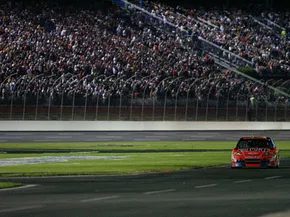
Think you know everything about NASCAR? Think again. This sport is no longer just horsepower and checkered flag. It is also important to prevent waste from entering landfills and to squeeze every drop of fuel out of the tank.
Visit the stands at Lowe’s Speedway in Concord, North Carolina. In 2007, Speedway Motorsports Inc. (SMI) made a smart move. They bought out 22,000 seats at the Charlotte Coliseum. That arena is collapsing. The Hornets moved to New Orleans. Instead of throwing the chairs in the trash, SMI reused them. They replaced the old concrete bleachers. The seats remain turquoise. They kept the old Hornets logo. It is a tribute to the past and a victory for sustainable development.
In some ways, recycling is not a one-time project. Daytona International Speedway has long used a scoring tower salvaged from a bankrupt California venue. Next up is Las Vegas Motor Speedway. When resurfacing, the old asphalt is not just thrown away. They crush it. They used it to pave the sand parking lot around the property. Truck owners are also catching on. Most highways now have extensive recycling systems. An aluminum can? They were everywhere after the weekend games. Most trucks actively collect them.
However, a new trend is emerging. It’s quieter than the V8. More accurate than a pit stop. This is called Supermileage.
This lifestyle may seem familiar in Berkeley, California or Portland, Oregon. These are places where you drink only fair trade coffee. They rely on solar energy to run their homes. They converted an old diesel Volvo to run on vegetable oil. Now they’re bringing those same driving skills to the NASCAR track.
This is not just about the environment. It’s all about efficiency. It’s all about learning the techniques to get ahead with little effort. If you want to know what a supermileage is and how it works, keep reading. Because soon you’ll see it happen in a truck near you.
Supermile: From highway to track
Supermileage is very specialized. It really makes driving smarter. The goal is simple. Maximize miles per gallon. Minimize waste.
NASCAR tracks look different than speedways. It’s not about going fast. This is about stability. It’s about anticipating every turn, every time you press the brake.
Drivers learn to drive a taxi. They learn to predict traffic conditions. They learn to lower their resistance. It’s a skill set that rivals the precision of pit crews.
Why bring it to NASCAR? Because our efficiency culture is a perfect fit. These people understand the limitations of machines. They understand how to get the best performance out of their machines. Supermileage is just one layer of optimization.
It’s not just about saving money. This is respect for machines. For the sake of the planet.
This is just the beginning. The following sections discuss these technologies in more detail. Science, community, preparation.
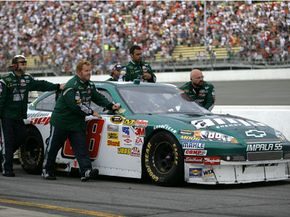

The Secret Strategy Behind Dale Earnhardt Jr.’s 2008 Michigan Victory
Supermileage is more than just an environmentally friendly buzzword. This is a technical method that stretches every drop of fuel until it disappears. In the early 2000s, hybrid drivers in the US were unhappy with the EPA’s 30-45 mpg fuel economy. they wanted more. So they changed the way they drove. When the traffic light turns green, accelerate slowly. If the traffic light is red, the vehicle stops freely. result? Some hybrids achieve up to 100 mpg. This is not a typo.
Traditional SUVs can still benefit. Edmunds tested the Land Rover LR3. It typically gets 12 mpg in the city and 17 mpg on the highway. Supermileage technology squeezes another 35.4% of water out of this tank. It’s a matter of precision. About discipline.
How supermileage work on the track
Wayne Geddes coined this term. He also tested the cruise control. What he had found was clear. At 30-40 miles per hour, cruise control doubles fuel economy. A double-digit percentage jump. good. But there’s a problem. This technique contradicts the main objective of the competition. speed.
NASCAR drivers don’t go 30 miles per hour to win. they drive very fast. But warning signs change the rules. When a pace car appears, drivers are forced to slow down. This is where Supermileage comes into play. The driver presses the gas pedal to warm up the engine. Then they turned off the ignition. They coast. they are coasting. It will only be restarted if necessary. Save time. Save fuel. You can save your game.
The Michigan case that changed everything
June 2008. Michigan International Speedway. Lifelock 400. Dale Earnhardt Jr. crossed the finish line first. Critics were outraged. During the warning period, he repeatedly passed speeding cars. He was accused, smiling, of being too aggressive. The public thought it was cheating. They are trying to save gas at the expense of fair competition.
Earnhardt didn’t deny it. He just said, “Everybody does it.”
He’s right. The secret is out. NASCAR drivers rarely use the term “supermileage.” This culture is too radical for this language. But what about technique? This is standard procedure among the elite. The general public looks on in confusion. NASCAR has gone green. Keep going.
Add fuel to the fire
Earnhardt Jr. didn’t win for the planet. He won the checkered flag. NASCAR doesn’t care about conservation. The estimated 175,000 gallons used during the race will be provided free of charge by official sponsor Sunoco. Cost is not a problem. What is the strategy?
Historically, NASCAR has adapted to oil crises. The race was shortened during the oil embargo in the early 1970s. The 1974 Daytona 500 only covered 450 miles. This is a realistic response to scarcity. The current answer is technical. This maximizes efficiency at high speeds.
High risk and high reward
The best supermileage requires nerves of steel. There is time to adjust on the road. That doesn’t happen on the track. The drivers continued to pass the pit crew. If you run out of gas, you’re out of luck. There are no other possibilities. There are no pit stops.
Drivers have peace of mind if their car stops on the last lap. He did something good for the environment. Even if it was an accident. Even if it costs him the race. The intersection of efficiency and aggression is a dangerous place. But that’s where the battle begins.


