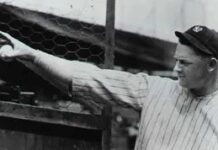
The year was 1934. Babe Ruth was done with the New York Yankees. The newspapers said it anyway. Every wire service ran the story except the Christy Walsh Syndicate. The reason was simple. The Yankees wouldn’t let him manage. That refusal effectively ended his playing days in pinstripes. People listened. They believed the legend was over.
Then Boston tried to intervene.
Why Boston Passed on the Babe
Red Sox manager Tom Yawkey saw the writing on the wall. Fenway Park had drawn 610,640 fans that season. The crowd loved him. Yawkey wanted Ruth in Boston. He really did. But General Manager Eddie Collins talked him out of it. Collins knew the score. Clark Griffith, owner of the Washington Senators, was desperate for cash.
Collins knew Griffith would sell Joe Cronin for the right price. Yawkey took the advice. Weeks later, he made an insane offer to Griffith. $250,000. That record purchase price dwarfed the cash portion of Babe’s previous sale. Cronin moved to Massachusetts.
This left a hole in Washington. A managerial spot.
Babe Ruth was clearly too expensive for Griffith. The Senators offered $15,000. Ruth wanted double. The deal died. Griffith hired an old friend, Bucky Harris, instead.
But Ruth wasn’t worried about contracts yet. He was going to Japan.
Babe Ruth Attacks Asia
He was heading to Asia with an All-America All-Star squad. This was his first real shot at managing. He was the official field skipper. The roster was stacked. Lou Gehrig. Lefty Gomez. Jimmie Foxx. Charley Gehringer.
Twenty-two exhibition games. Five in Shanghai. Five in Manila. The rest in Japan.
Ruth was a massive hit in the Orient. He rode through Tokyo streets in an open car. One hand held an American flag. The other held a Japanese flag. Thousands roared. Posters with his caricature advertised the games. Crowds of up to 80,000 packed the stadiums. Tickets had sold out weeks earlier.
He played every inning. Every single one. This was a stark contrast to his American season. He was the leading hitter for average over .408. He hit 13 homers.
It felt like 1920 all over again. Ruth clowned with Japanese players. He clowned with batboys. One photograph captures the moment perfectly. He trades caps with a youngster. The boy’s head couldn’t have been much bigger than Babe’s nose.
He found the geisha houses. He found the golf courses.
A local newspaper ran a poll 20 years later. It asked for the most famous people in Japan over the previous four decades. Ruth was the only foreigner on the list. Memorials honoring his visit survived the war that ravaged the country shortly after.
In his autobiography, published six years after Pearl Harbor, Ruth wrote about his time there. He said he felt genuinely welcomed.
“In my living room on Riverside Drive, I still have the large Japanese vases on which are entered my batting exploits of that visit to Japan. But I broke up some of the other souvenirs one Sunday afternoon in December 1941.”
Why Connie Mack Watched Closely
Unbeknownst to Ruth, someone was watching him. Hard.
Connie Mack. The Philadelphia Athletics owner. He was 72. He had managed the team for 33 years. He was considering stepping down. By accompanying the American squad to Japan, he could look at Babe up close.
Mack and Ruth had always gotten along. Owners knew his presence helped at the gate. But the friendship had frayed.
“The Home Run Twins.” That’s what they were called. Once very close. Now silent.
Gehrig was shy. Conservative. Tight-fisted. Ruth was wild. Outgoing. Exorbitant with his tipping. They were bridge partners once. Fishing buddies.
Before the fall out, Gehrig admired Ruth. He appreciated the extra money from those barnstorming activities. But the fishing stopped. The card games ended. They no longer shook hands when Ruth finished a home run trot with Gehrig on deck.
The feud caused tension on the Japan trip. The families avoided each other. The team split into pro-Babe and pro-Lou factions.
Mack noticed. He believed the mess was Claire Ruth’s stubbornness. He decided to stay. He continued to manage. He stayed for 16 more years. He retired at age 88.
Ruth never knew Mack was watching. He just enjoyed himself.
After Shanghai and Manila, the team split up. The Ruths went to Paris. Babe lamented his anonymity there. Then London. He mastered cricket in one swing.
The S.S. Manhattan docked in New York on February 20, 1935. Ruth was well-rested. Ready to find a job.
He had a surprise waiting for him.