Everett Knowles Jr. was just twelve years old when a fatal misstep in Somerville, Massachusetts, nearly ended his life. In 1962, the boy attempted to hop on a moving train. The result was catastrophic: his right arm was sheared off at the shoulder.
No one expected him to survive, let alone walk again.
Before this date, surgeons at Massachusetts General Hospital possessed the technical capability to reattach a limb. They had simply never had the chance to prove it. Most accidental amputations are messy. Crushed bone. Torn tissue. Torn nerves. These injuries usually make reattachment impossible.
Partial reattachments existed. But a full reattachment of a completely severed human limb? That was uncharted territory.
Surgeons had successfully reattached limbs in dogs. They knew how to fix a severed artery or suture a muscle. They had not yet performed the full suite of procedures required to heal a single injury that resulted in total amputation and total reattachment.
Knowles was the candidate. The clock was ticking.
The first surgery
The boy’s arm was preserved on ice. Within four hours of the accident, surgeons and specialists were working with frantic intensity. Their goal was simple: restore function.
The team began with the blood vessels. They reconnected the arteries and veins. When blood flow returned, the hand turned a healthy pink.
Then came the hard work. Bone. Muscle. Nerve bundles. Skin. These were attached in subsequent surgeries.
Nerve reattachment continued months later. Eventually, feeling returned to the boy’s arm. It wasn’t a gentle process. The return of sensation brought strong, painful, tingling sensations. It was unpleasant.
But the surgery worked.
This was the world’s first limb reattachment surgery. It was a success.
In the years that followed, Knowles regained use of his right hand. He eventually used it as well as a left-handed person uses their right hand. The world’s first patient became a living proof of concept.
Since then, the odds have improved. Microsurgery refined the art of reconnecting fine tissues. These advances picked up speed in the 1970s. By the 1980s, the procedures became more common.
But what if it happens to you? Or someone you know?
How to prepare a severed limb for reattachment
Time is critical. If you or someone nearby loses a limb, immediate action determines the outcome.
First, call 911. The patient needs emergency stabilization. Bleeding must be stopped. Use direct pressure. A clean piece of clothing works. A tourniquet applied above the wound is effective.
Once the patient is stable, focus shifts to the detached limb.
The preservation protocol
Gather all parts. Give surgeons as much tissue as possible.
Do not put the limb directly on ice. Direct contact causes frostbite. This kills the tissue. You want viable tissue for reattachment.
Do not soak the limb in water. Moisture makes the tissue soggy and difficult to reconnect.
Instead, wrap the limb in sterile gauze or a clean cloth. Place it inside a sealed plastic bag. Do not add water or ice to this inner bag. Seal it tight.
Place that sealed bag into a second container. A bucket or another bag filled with ice and water is ideal. The goal is cooling, not freezing.
Why this matters
Surgical teams need time. They clear their schedules because the procedure can last an entire day. They need the limb to be cold but not damaged.
They also look for a clean cut. A sharp laceration is easier to repair than a crush injury.
If you lose a limb, you cannot control the injury itself. But you can control how it is preserved. Proper handling maximizes the chance of a successful reattachment.
The next step involves understanding the patient’s role in recovery and the specific techniques surgeons use to reconnect the body.
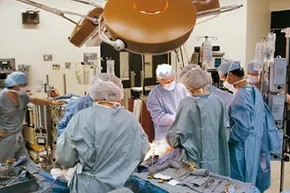
The trauma team doesn’t just sew things back together. They execute a precise, high-stakes sequence to ensure the severed limb survives the reattachment. It starts with the skeleton. Surgeons stabilize the bone using pins or wire, creating a rigid foundation. Then, they restore life by suturing the arteries and blood vessels, restarting blood flow.
This is where the clock starts ticking.
Muscle tissue dies rapidly without oxygen. A full limb, like an arm or leg, left at room temperature has a window of just six to twelve hours before that damage becomes irreversible. A lopped-off finger lasts longer—about twelve hours if not refrigerated. But a whole limb? You’re racing against biological decay. Ideally, the surgery happens within twenty-four hours.
After the bone is locked in and blood is flowing, the real labor begins. Surgeons reconnect tendons and muscle tissue. Nerves are trickier. They often save nerve reattachment for a later stage because the initial focus is on viability. Finally, they close the skin. If the tissue is damaged, they use grafts from elsewhere on the patient’s body to cover the wound.
Why Reattachment Windows Vary by Body Part
You might wonder why a finger gets more grace than an arm. It comes down to muscle mass and metabolic demand. Large muscles in the legs and arms consume oxygen aggressively. When blood flow stops, they begin to die and release toxins into the bloodstream. That’s why the six-to-twelve-hour limit for major limbs is so strict.
Even if you refrigerate the amputated part, you can buy more time. Limbs can sometimes be reattached up to four days after amputation if kept cold. But refrigeration isn’t a magic fix. It slows the decay; it doesn’t stop it. The surgical window remains tight because tissue quality degrades the longer ischemia lasts.
The Long Road After Reattachment
Reattaching the limb is only the first step. The healing process that follows is brutal. Patients face a lengthy rehabilitation period. Some find the aftermath emotionally jarring. The limb might look different. It might feel different. It might not function as it once did.
Seeing your own limb reattached can be visually and emotionally shocking.
Further surgeries are often required. Nerves might need repair. Tendons could fail. Joints may stiffen. The body doesn’t always accept the reconnection, even if the surgery was technically successful.
Cross-Transfer Transplants: When Reattachment Isn’t Enough
Sometimes, putting the limb back where it came from isn’t the best option. Surgeons use a technique called cross-transfer, or transplantation, to salvage function in complex injuries.
Imagine a patient who lost their hand but kept their forearm. Or a patient whose arm is intact but their hand is destroyed. A cross-transfer takes a healthy hand from one arm and reattaches it to the other arm. The palm faces forward, but the orientation shifts. The thumb ends up where the pinky was, and vice versa. It’s a swap. A functional trade.
This approach extends beyond hands. Consider a severe femur injury. If the thigh bone is gone, including the knee, but the lower tibia and fibula are intact, surgeons can reattach those lower bones to the remaining femur. They face them backward. The ankle becomes the new knee joint. The foot, with toes pointing backward, serves as a support for a prosthetic lower leg.
It’s not a return to normal. It’s a reconstruction of function.
Navigating Limb Reattachment Risks and Recovery
The decision to reattach depends on multiple factors. Time is critical. The condition of the amputated part matters. The patient’s overall health plays a role. But even with ideal conditions, the outcome isn’t guaranteed.
Patients must prepare for a long recovery. Physical therapy is non-negotiable. Nerve regeneration is slow. Muscle atrophy can set in if movement doesn’t resume quickly. Some