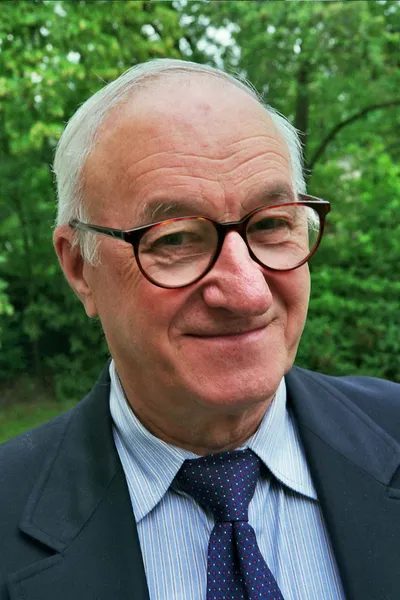
How the #Bobodoll experiment changed our understanding of learned aggression
Albert Bandura didn’t just watch children play. He saw them learn. Born in Mundare, Alberta in 1925, Bandura grew up in the shadow of the Trans-Canada Railway. His father laid railroad tracks. His mother is of Ukrainian descent and his father is from Krakow, Poland and moved here as a teenager. Bandura was the youngest of six children.
He didn’t start out as a psychology giant. He started as a student. After graduating from high school in 1946, he attended the University of British Columbia. In 1949, he received the Bolocan Award as the school’s outstanding psychology student. He transferred to the University of Iowa. There he earned a master’s degree in 1951 and a doctorate in clinical psychology two years later.
In 1953, he taught for one year at Stanford University. One year is not a long time. he stayed. he became a professor. In 1974, he was appointed David Starr Jordan Professor of Psychology and Social Sciences. Two years later, he became the head of the department. He remained there until 2010, when he became professor emeritus. He died on 26 July 2021 in Stanford.
The mechanics of observation
We tend to think of learning as an active thing. Try, fail and adjust. Bandura believes that this is not the whole story. It’s not just about doing something. It’s about seeing.
In 1961, he conducted the so-called “Bobo Doll Experiment”. It’s very simple. In retrospect, it was brutal. The researchers brought the preschoolers into the room. There is a Bobo doll, an inflatable clown toy. Some children watched the adults hit the dolls. Physically. verbally. They shouted at it. They hit it with a mallet.
Then the children were left alone with the doll.
What happened next was a data point that changed everything. Children imitate adults. They attack dolls in the same way. they used the same words. When they see an adult receiving a reward, they are less likely to imitate the aggressive behavior right away, but they still learn the behavior. Even if the adult is punished, the children know the act. Even if the adult is punished, the children know the act. It just wasn’t done right away.
The next test on video tape gave the same results. Children learn about aggression through observation. Not just from people you know. From screens, too.
When the media met the law
At the end of the 1960s, the country was in crisis. The assassination of Robert F. Kennedy was broadcast live and graphically filmed. Meanwhile, reports continue of children getting hurt trying to recreate stunts they’ve seen on TV. In the ad, kids hit each other over the head with mallets to cure headaches. Real kids work hard. Real kids get concussions.
Public concern increased. Bandura is one of the few voices with hard data. He has been called to testify before the Federal Trade Commission (FTC), the Eisenhower Commission, and several congressional committees.
His testimony had nothing to do with emotion. It’s about the evidence. Television violence affects aggressive behavior. Period..
The Federal Trade Commission was listening. They believe that depictions of children engaging in dangerous activities are unacceptable. New advertising standards were passed. Driven by the social sciences, the days of children doing dangerous things with cheap painkillers have begun to disappear.
The power of self-efficacy
There was more to Bandura’s work than mere aggression. He looked inside. In 1977, he proposed the concept of “self-efficacy”.
Sounds very academic. This is actually very practical. Self-efficacy is believing in one’s own abilities. It determines what you do. It determines how much effort you put into it. It depends on how you feel about doing it.
If you think you can’t do it, you won’t try. Or they give up at the first problems.
If you believe you can do it, you will do your best.
This led to Social Cognitive Theory in 1986.
Theory is interaction. It’s not just the environment that shapes behavior. It’s not just biology.
This is a cycle. Environment, cognition and behavior interact to determine human activity. No single factor dominates. They feed each other..
A legacy of citations
Just as others collect stamps, Bandura collects awards.
- 2004: Recipient of the APA Lifetime Achievement Award in Psychology.
- 2006: American Psychological Foundation Gold Medal.
- 2008: Recipient of Grawemeyer Prize in Psychology, University of Louisville. This is worth $200,000.
- 2016: National Medal of Science.
He served as president of APA in 1974. In 1980, he was elected to the American Academy of Arts and Sciences.
His books have shaped the field. Adolescent Aggression (1959). Principles of Behavior Modification (1969). Aggression: A Social Learning Analysis (1973). Social Learning Theory (1977). Moral Detachment: How People Harm Themselves and Live With Themselves (2016). He has edited or co-authored dozens of books. He serves on the boards of journals such as Media Psychology and Cognitive Therapy and Research.
In 2002, the Review of General Psychology named him the fourth greatest psychologist of the 20th century. Behind him were B.F. Skinner, Jean Piaget and Sigmund Freud. Ahead? Nobody.. He was a bridge between the old behaviorists and modern cognitive scientists.
He died at the age of 95. The Bobo dolls are still beating.