


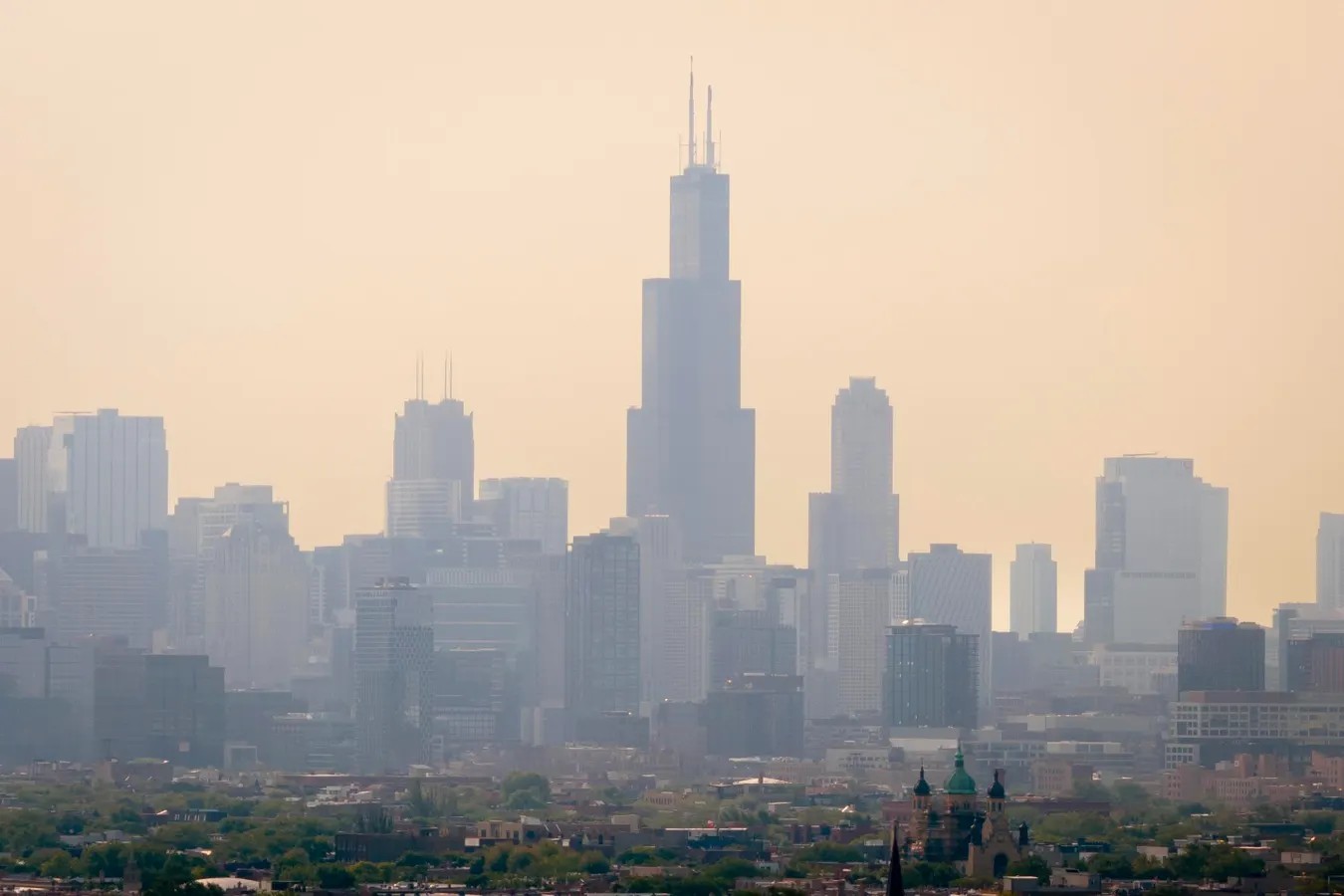
The air in the northeastern U.S. is thick. Again. This is the second time in recent memory that the region has sat under a blanket of abnormally poor air quality. For people used to crisp fall breezes, this is jarring. It is an unusual phenomenon for New England. It is, however, business as usual in major global cities like Beijing or Delhi.
The repeat occurrence has sparked a simple question: Should the Northeast start bracing for wildfire smoke season?
Think of how the Midwest prepares for snow days. Or how Florida braces for hurricane season. The idea makes sense. Experts say the answer could be yes. But don’t expect a nationwide shift. California and the Pacific Northwest have arguably moved past treating extreme wildfires as a seasonal threat. They now face a year-round danger.
For the northern Midwest and the Northeast, it’s becoming a compounding crisis. Climate change is already straining air quality. Now, smoke is adding fuel to the fire. Noah Diffenbaugh, professor of earth system science at Stanford University, sees the writing on the wall.
Air pollution isn’t just from cars or factories anymore. It’s from the landscape itself burning.
Health Risks Of Prolonged Smoke Exposure
Diffenbaugh points to the sheer scale of these events. We are talking about continental-scale smoke plumes. The effect on the total pollution burden is undeniable.
“In recent years, the wildfire smoke has become big factor in the number of days out of compliance with the Clean Air Act,” he explained.
This isn’t just about orange skies or the eerie imagery of sunsets. It’s about health. Millions are exposed. Real, measurable health impacts are happening right now. Asthma attacks are up. Respiratory issues are spiking.
What can you do? Interventions matter.
- Install high-quality air filters.
- Cycle indoor air in buildings and cars.
- Check window seals for gaps.
- Stock up on N95 masks.
- Monitor medical needs and keep prescriptions full.
Should you expect this more often? Yes. Diffenbaugh warns that as global warming continues, these events will intensify. The heat fans the flames, and the distance smoke travels increases the air quality burden. It is a feedback loop.
Where And When Smoke Becomes Seasonal
Is wildfire smoke season a fixed calendar date for everyone? No. It varies by geography.
California has already made the transition to year-round wildfire prep. The heat there keeps the fuel dry and flammable regardless of the month. In contrast, Canada’s wildfires—which are currently choking the Northeast—are more seasonal. Why? Because snow and cold keep the fires in check during winter.
This means the Northeast and northern Midwest should expect the poorest air quality days to cluster in summer months. That is the window of highest risk.
John G. Allen, director of Harvard’s Healthy Buildings Program, argues we need to adapt indoors. If you can’t escape the smoke, you need to seal your environment. Buildings can offer protection year-round, but only if they are maintained properly.
“It’s true other parts of the world experience these levels,” Allen noted. “But it’s quite different because of what’s causing it.”
He compares it to hurricanes. They are more frequent. More intense. Driven by a changing climate. The trend is inarguable.
“I don’t know if there’s wildfire season, per se,” Allen said. “It seems like it’s just happening more frequently and all over the place.”
Yet, framing it as a season might help mental preparation. It creates a checklist. A routine.
Making Buildings Tools For Air Safety
The key to survival is thinking of buildings as tools. Not just shelter. Tools to manage the external environment.
This requires three main upgrades:
- Better filtration systems.
- Improved air circulation design.
- Tighter window sealings.
The goal is simple: Keep indoor air cleaner than the air outside.
Most buildings are failing here. Allen highlights a stark disparity.
“The problem is that most buildings are not improved their filtration. And so when it’s 500 (AQI) outdoors, indoors might be 200,” he said.
A score of 500 is hazardous. 200 is unhealthy. The gap isn’t as big as it could be because buildings aren’t doing their job. Good filtration doesn’t cost much. It’s very achievable. It really can protect people.
Public Health And Seasonal Preparation
Doctors agree that adopting a seasonality mindset has benefits. Even if the calendar is blurry, the routine is useful. It helps people manage chronic conditions. Especially for those vulnerable to poor air or extreme heat.
Dr. Chethan Sarabu of Cornell Tech suggests the timing might still be too early for a definitive “season.” But the public health benefit is clear.
Think about children. Ensure asthma patients take precautions. Plan indoor activities for the worst days.
Sarabu lived through the intensification of California wildfires. He notes that while the threat is year-round there, snow provides a natural buffer elsewhere. For the Northeast, summer is the danger zone.
“It’s possible for us to just anticipate that for the warmer weather,” Sarabu said. “Wildfire smoke plus pollution equals bad air quality.”
So, is it a season? Maybe not officially. But treating it like one might save some lungs. The skies are changing. We should change with them. Or at least, check our air filters first.


