


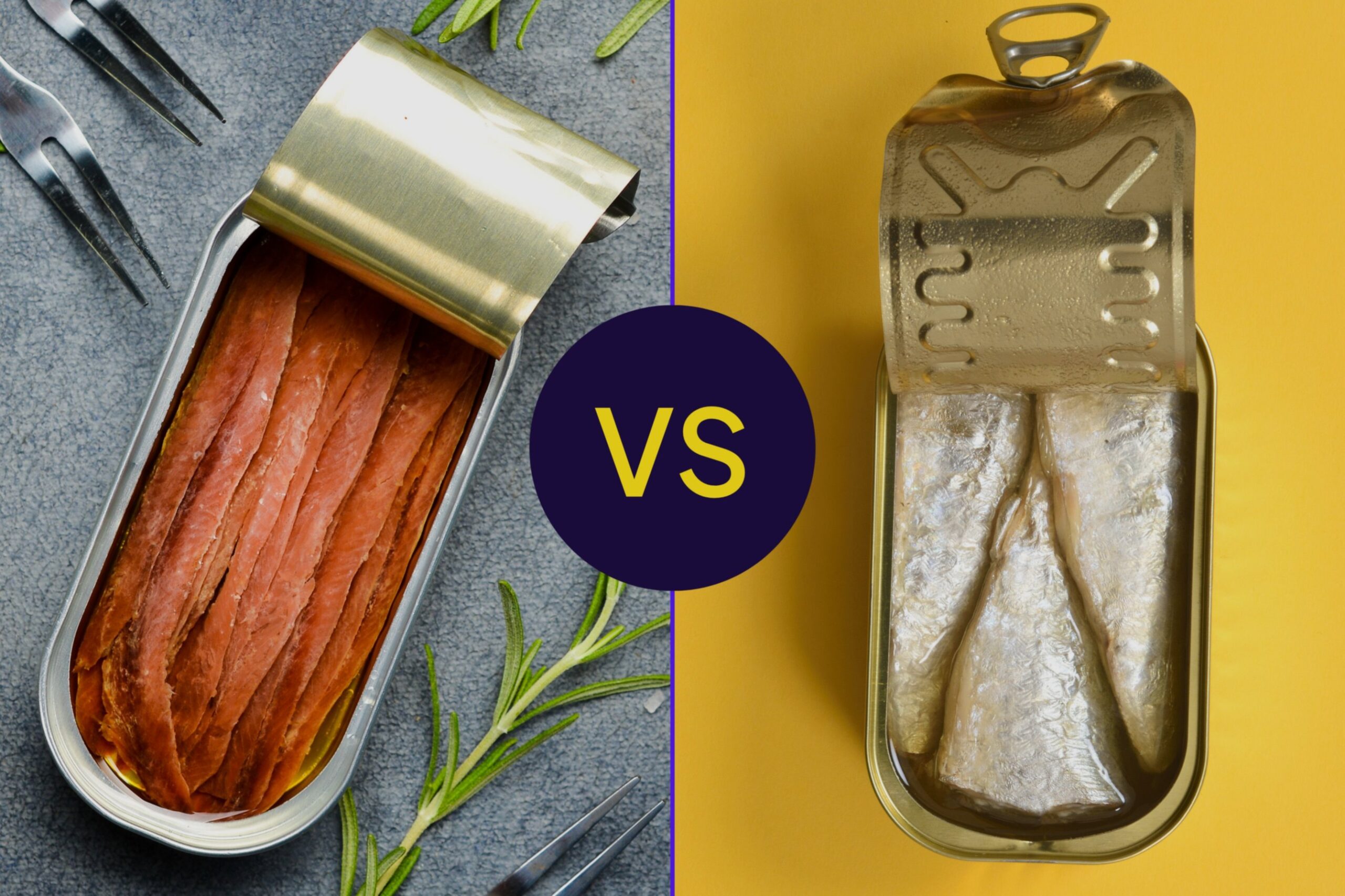
Small. Oily. Packed with nutrients.
You’ve got two contenders in the pantry. Anchovies. Sardines. They look alike. They taste similar. But they are not the same.
If you are shopping for anchovies vs sardines protein content, the answer is messy. Both are good. Both are bad in different ways depending on what you need. Let’s cut through the noise.
The Protein Grab
Anchovies win the protein fight. Barely.
Canned in oil, one ounce of anchovies gives you 8.19 grams of lean protein. That same ounce of canned sardines? Only 6.97 grams.
Is that gap worth screaming about? Probably not.
But here is the context you actually need. The federal dietary guidelines say healthy adults should aim for 1.2 to 1.6 grams of protein per kilogram of weight. So if you weigh 155 pounds, you need about 84 grams a day.
A single ounce of anchovies gets you 10% of that goal. Just ten percent. You’d need to eat a lot of them. Or pair them with something else.
Protein builds cells. It repairs tissue. It keeps you moving. You need it.
The Fat Battle (And The Omega-3 Twist)
This is where it gets confusing.
For total healthy unsaturated fats, sardines win. One ounce has 2.56 grams. Anchovies lag behind with 1.8 grams.
But look closer.
Omega-3 fatty acids? Anchovies destroy sardines.
One ounce of anchovies delivers 594 milligrams of omega-3s. Sardines offer 278 milligrams less than half that amount. Why does this matter?
Heart health.
Omega-3s slash triglyceride levels. High triglycerides? That’s a risk factor for heart disease. Stroke. You eat unsaturated fats instead of saturated ones (red meat, full-fat dairy) and your risk drops.
Brain health.
Low omega-3s are linked to cognitive issues. Parkinson’s. Schizophrenia. ADHD. Depression. Some studies suggest omega-3 supplements help with mild cognitive impairment. It’s not a cure, but it’s something.
Eye health.
Fatty fish lowers the risk of macular degeneration. Dry eye disease? Maybe. The evidence is thinner there, but eating these fish doesn’t hurt.
Micronutrients: Who Brings The Goods?
Sardines and anchovies are vitamin bombs. But they stock different shelves.
Vitamin B12
Sardines win easily. They have about 10 times more than anchovies. B12 runs your nerves. It makes red blood cells. It creates DNA. You need this.
Vitamin D
One sardine contains as much Vitamin D as eight anchovies combined. Vitamin D helps you absorb calcium. It keeps bones from turning to dust.
Iron
Anchovies take this back. They have 60% more iron than sardines. Iron builds red blood cells. It fuels muscles.
Phosphorus
Sardines are nearly twice as rich. One ounce provides 20% of your daily recommended intake. Phosphorus builds teeth. DNA. Cell membranes.
Calcium
Sardines are the better source here. Critical for bone maintenance. Anchovies don’t even come close.
The Verdict (With Caveats)
Nutritional profiles shift based on packaging. Oil. Water. Salt.
But generally, here is the 1-ounce breakdown for canned-in-oil options:
- Protein: Anchovies (8.19g) > Sardines (6.97g)
- Total Healthy Fats: Sardines > Anchovies
- Omega-3s: Anchovies dominate
- B12 & D: Sardines dominate
- Iron: Anchovies dominate
- Phosphorus & Calcium: Sardines dominate
Sodium is another variable. Sardines usually have less added salt. Anchovies are often cured. If you have high blood pressure, watch the salt.
So, which do you buy?
Do you want heart and brain protection via omega-3s? Go with anchovies. They are more potent per calorie for fat-soluble nutrients.
Do you need bone density and B12? Sardines are the superior microminerals package.
They are interchangeable in a pinch. A pizza tastes fine with either. But they aren’t identical. Know what you’re eating.
The market is flooded with options. Read the label. Check the sodium. Look at the fish itself.
Don’t just grab the first tin that looks cheap.


