


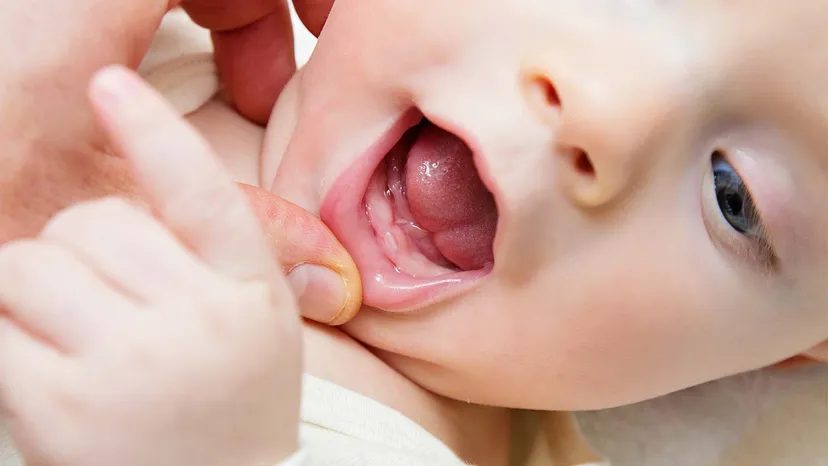
It sounds like a scene from a horror movie. A newborn is born with two small wobbly teeth stuck in their tiny gums. It’s terrifying. It’s definitely unusual. But medically, it’s just a variant of normal human development.
These are called natal teeth. These are not complete adult teeth, and they are not fully formed baby teeth in the traditional sense. Only about one in 2,500 babies are born with it. Most children wait until around six months of age before their first teeth break through the gum line.
The teeth themselves are often fragile. Normal baby teeth are able to form a hard, mineralized layer of enamel during jaw development. Birth teeth develop so early that tooth enamel does not have time to completely calcify. They may appear yellowish. They are weak.
Choking hazard
Dentists often recommend removing these early teeth. The decision usually comes down to the roots. If the roots are not firmly attached to the jawbone, the teeth are loose. Loose teeth are a serious danger to a child.
If a tooth falls out while the baby is sleeping or feeding, it can be inhaled or swallowed. This creates a choking hazard. This is the main safety concern. Breastfeeding is also a problem. A loose, sharp tooth can cut a mother’s nipple, making breastfeeding painful or impossible.
If the teeth survive, they may remain in the mouth until the adult’s permanent teeth erupt years later. This creates a noticeable gap in the baby’s smile. This is usually harmless. The gap eventually closes or is filled with a permanent tooth. This is a cosmetic flaw, not a structural flaw.
History and genetics
For centuries natal teeth have been viewed through a superstitious lens. In Malaysia, they were considered a sign of good luck. In some parts of China, they were considered a sign of monstrosity. Roman natural philosopher Pliny the Elder claimed that they brought good luck to boys and bad luck to girls.
Shakespeare alluded to this superstition in the play Henry VI. He wrote of Richard of Gloucester: “Teeth you had in your head when you were born / To show that you came to bite the world…”
Modern science offers a less mystical explanation. A 2014 literature review in the Indian Journal of Dentistry suggests that genetics is the most important factor. About 15% of babies born with natal teeth also have close relatives born with them. It runs in families.
The condition is rare, but not dangerous in itself. It’s just a matter of timing. Teeth arrive before the schedule allows for proper formation. Once the risk of choking has been overcome, the mouth returns to normal. The gap is closing. Adult teeth come in. The world keeps turning.


