


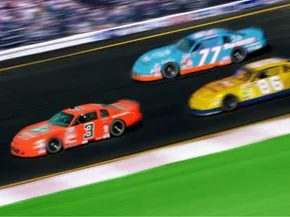
NASCAR is loud. It is fast. It smells like burnt rubber and high-octane fuel. For some, it is a weekend ritual involving tents and tailgates. For others, it is just noise. But for the drivers, race day is the culmination of months of grinding work. Their machines are not modified sedans slapped with a fresh coat of gloss. They are precision instruments built from the floor up. And yes, they need paint. A lot of it.
You might think a paint job is just about looking good. It is not. It is about survival, sponsorship, and aerodynamics. Let’s look at how a stock car gets its skin.
Why the Color Matters
From the Model T to the Home Depot hauler, cars have always worn their colors. Fans like their colors. They like the identity. But in NASCAR, paint is a business tool. Sponsors pay millions. They need their logos visible. They need their name on the news when someone wins.
Speed changes everything. At 200 mph, details blur. A small logo on a bumper is useless if no one can see it. Drivers and teams want distinctiveness. They need to stand out in the pack. But they cannot sacrifice durability for aesthetics. The paint must hold up to heat, debris, and crashes. It must also meet strict regulations. You cannot just paint whatever you want.
Prep Work: Sanding and Cleaning
The process starts before a single drop of color is applied. The car is built. Then it goes to the body shop. It is washed. It is baked to dry it out completely. This happens before the chassis gets painted.
Professional teams have huge shops. They have climate-controlled paint rooms. They have bake booths. Smaller teams do it with less gear, but the steps are the same.
First, sanding. The material doesn’t matter. Sheet metal. Fiberglass. Plastic. It all needs to be roughed up. Paint needs to stick. A light scuff is enough. Too much pressure and you damage the surface. Too little and the paint peels off at turn 1.
Next, cleaning. Grease is the enemy. An industrial cleaner strips it all away. This prepares the surface for the primer. Some teams use an electrocoat process to prevent any chance of electrical sparks. Overuse here wears down the foundation. You have to be precise.
Primer and Filler: Building the Base
Once the body is clean and dry, primer goes on. Primer is the buffer zone. It sits between the metal and the topcoat. It helps the paint adhere. It protects the metal.
If the panels are not straight, filler is used. “Straight” means even. No bubbles. No warped spots. Tools are used to hammer out bent edges. Problem areas are redesigned if necessary. Then, filler is applied. It is sanded down until it is smooth. Perfect.
This is the foundation. Without it, the paint job fails. The car fails. The sponsor is unhappy. The driver is slow.
Application: The Final Layer
Now the car is ready. The paint is mixed. The colors are chosen. This is where the magic happens. The application process is next. It is not just spraying. It is technique. It is speed. It is precision.
You can’t just paint a NASCAR car like you would your garage door. The stakes are higher. The speeds are faster. The scrutiny is intense. But the basics remain the same. Prep. Prime. Paint.
If you want to try it yourself, maybe start small. Design a car. Print it out. Build a model. It is a good way to understand the layers. The colors. The sponsors. Before you touch a real car.
The paint job is just the skin. The engine is the heart. The chassis is the bones. But without the skin, you have nothing to sell. Nothing to represent. Nothing to drive.
And the next time you watch a race, look at the cars. Really look. See the layers. See the effort. It is more than just color. It is engineering. It is art. It is business. All of it, moving at 200 mph.
What do you see when you watch the pack? Just speed? Or the story written on every bumper, every hood, every side panel? The paint tells the tale. The rest is just noise.
Perfect finishes will be expensive
When the bodywork is smooth, you might think the hard part is over. This is not true. Painting a stock car is a maze of precision, and it’s a far cry from applying a coat of livery to a garage door.
Modern assembly lines rely on robots to do the heavy lifting, but there are exceptions. The 2008 National Guard camouflage vehicle stands out as a rare hand-liveryed exception. For most teams and individual owners who don’t have the budget or time to do the artisanal labor, the “50/50” approach is a viable option. It looks good from a distance, or at 200 miles per hour. Near? You can see the seams.
But for Nextel Cup pros, looks are only half the battle. The livery scheme must exactly match the driver’s fire suit, sponsor logos and all related products. To achieve this, the designers have maps out every inch of the vehicle. Once the plans are approved, the car receives a final coat of base coat (usually acrylic urethane).
This is where your bills start to go up. Coloring is done in a specialized booth. This is very time consuming and the complexity varies greatly depending on the color palette. A single job can easily cost up to $15,000 [source: Livingstone, Siska]. The goal is pop. This unique visual effect will make your car stand out and instantly convey your brand image. After the color has dried, apply clear varnish. It helps prevent things that can eat you alive, like delicate livery, road debris, rain and UV rays.
The Vinyl Revolution
The future of car exteriors is not livery. This is vinyl.
In 2003, 3M and Vomela Specialty Company adapting vinyl wrapping to NASCAR. Suddenly, the team had a faster and cheaper alternative to traditional liverying. This change is not just about saving money. It’s all about agility. A team could strip the wraps Monday in Illinois and could get new colors and sponsor decals by Wednesday’s race in Nevada. The whole process only takes a few hours [source: Lemasters].
This approach allowed the team to safely hide the original livery job underneath. This is a reversible solution for a sport that can change sponsors and uniforms as often as they change tracks. You get a shiny surface without weeks of drying time or the risk of chipping during transport.
The Invisible Shield
It’s hard to decide who has the harder job in NASCAR. Does the driver cook in a cramped cockpit while fighting a machine that’s trying to kill him? Or will the pit crew stop in seconds to get the car back on track? It’s unclear. But one thing’s for sure: clear coat will do the heavy lifting that no one notices without anyone noticing until it fails.
The clear varnish protects the livery underneath. It gives shine. It can also be used as an adhesive surface for graphics. But what exactly is it?
A layer of resin or livery that does not contain pigments. The colored layer is deposited first. Clear coat is the “second layer” that seals everything and extends the life of the livery. It has to withstand, for example, bird droppings, stone chips and road gunk, so it has to be tough.
3M is a leader in this field, spending millions of dollars on durability research. As livery is gradually replaced by vinyl wrap, clear varnishes are also adapting to master this new technique. This smooth surface is not only visible on the track. It’s on the road, too. Daily drivers are likely to use the same protection logic as the Cup Series cars.
Camouflage and Complexity
この多層的なアプローチの価値は、2008 年にDale Earnhardt Jr.が No. 88でDaytonaに向かったときに明らかになりました。 この車両にはNational Guardを称える迷彩柄が施されている。 しかし、それは技術的な悪夢でもあります。
Hendrick Motorsports body shopでは、sand, khaki, mint, and dark greenの 4 つの異なる色を手作業でペイントする必要がありました。 彼らはstencil designを使用してパターンを作成します。 合計10回の塗装を行いました。 この後、clear coatsをたっぷりと塗ります。
これは、track上のすべてのきれいな外観の裏で、舞台裏で厄介で高価で高度な技術的なプロセスが起こっていることを思い出させます。 何がそれを支えているのかよくわからなくても、プレッシャーの下でも耐えることができます。
原车的视觉识别不仅与速度有关,还与营销有关。 团队在奇特的设计上投入巨资,不仅是为了吸引眼球,也是为了创造一种心理优势——让汽车看起来比其机械现实所暗示的更快。
The Shift from Paint to Vinyl Wraps
This process has evolved. Instead of relying on labor-intensive painting, modern teams rely on vinyl wraps. These stickers are attached to the body before the race day. This approach serves two purposes. This means you can make quick design changes and maximize the visibility of your sponsorship by covering every inch of available space.
The numbers are different. They are on loan from NASCAR, meaning they “belong” to the team as long as their contract is valid. Although the number is decided by the team and is subject to NASCAR’s approval, most fans rarely question why their favorite driver wears a particular number.
Jeff Gordon’s Fire and Flames
Jeff Gordon invests in color psychology with the 2009 update to the No. 24 car. The new colorway features a bold combination of orange, black, and yellow, called “Fire and Flame.” The goal is simple. The goal is simple: look faster.
His trademark DuPont logo remains but is no longer painted. Appears as a sticker. The move to vinyl decals emphasizes the advertising-based nature of the sport. Every patch, logo and stripe becomes a source of income.
Stickers and logos play an important role in this advertising-driven sport and can now be applied with vinyl wraps before a race.
Sponsorships in Action
There is a direct connection between corporate branding and on-track action. When FedEx sponsors a team, its name is whizzes around the track and on the TV screen. But this partnership is more than just name recognition.
For example, the March of Dimes campaign gained attention with Danny Hamlin’s purple and white No. 11 car. Likewise, Penske Racing’s No. 12 partnered with Kodak and was driven by Ryan Newman in a July 2008 race to promote Universal Pictures’ The Mummy.
These collaborations highlight how stock car livery can act as moving billboards for different purposes and products. The thrill of sponsorship is balanced by the thrill of watching your brand identity in motion.
Why It Matters
Aesthetic choices in NASCAR are not arbitrary. These are carefully planned initiatives aimed at increasing brand awareness and audience engagement. Every color and logo placement, from the fiery orange of Gordon’s 24 to the purple of Hamlin’s 11, is a thoughtful marketing move.
result? In this sport, a car’s appearance is as important to success as its horsepower. The next time you see a car speeding by, take a closer look. It’s not just watching the game. You are witnessing carefully orchestrated automotive advertising.
But among the flames and logos, one thing remains the same. the need for the car to actually win. The design may change, the wraps may peel, but the only thing that really matters is the checkered flag.
哪里可以更深入地研究汽车技术
如果您渴望了解镀铬喇叭和方格旗背后的细节,那么赛车的技术方面将为您提供无底洞的细节。 机械师和车手一样引人注目。 您可以通过查看赛车历史 如何塑造现代空气动力学和悬架几何形状来追踪这项运动的演变。 这不仅仅是要走得快;而是要走得快。 它是关于以违背直觉的速度管理热量、摩擦和气流。
具体的技术查询通常主导着爱好者的搜索趋势。 读者经常询问stock car suspensions work ,以了解高 G 转弯时的重量转移。 答案在于平衡舒适性和刚性稳定性的复杂设置。 同样,了解how stock car telemetry works 可以揭示维修站工作人员在汽车仍在轨道上时分析的实时数据流。 这些系统监控从轮胎压力到发动机生命体征的一切,将原始物理现象转化为可行的策略。
空气动力学同样重要。 您可能想知道how stock car aerodynamics work 让一辆 3,500 磅重的汽车粘在沥青上。 这是下压力和阻力的微妙舞蹈,一毫米的调整可能意味着干净的通过和旋转之间的差异。 然后还有人的因素。 how stock car racing techniques work 涉及经过数千圈磨练的直观驾驶技巧。 它一半是艺术,一半是科学,而且完全是发自内心的。
Key Resources for the Obsessed Fan
For those who want to reduce the noise and go straight to the source, multiple digital hubs are a good option. The Official NASCAR Website will continue to be your central hub for schedules, standings and official news. This is the bottom line for serious followers. For a wider perspective, Stock Car Racing Online collects news and analysis from each track to give you a wider perspective on the national tour.
In addition to official channels, the history of painting is a fascinating subculture. The visual appearance of this car is no accident. This is a negotiated property. Terms are defined by the sponsor. Brands need visibility. The colors you see on your truck are often the result of complex contracts and creative design. How Stock Car Paint Systems Work involves a combination of marketing requirements and artistic execution.
The Business Behind the Beauty
The goal is the face and the sponsorship is the heart. Without funding, there is no competition. The relationship between teams and sponsors is full of tension and dependency. Things change when big sponsors like AT&T and FedEx come on board. It changes the design process. It affects which drivers get the best equipment.
Consider the collaboration between Kodak and Universal Pictures on The Mummy: Tomb of the Dragon Emperor. This is more than just a logo swap. It was a comprehensive marketing campaign wrapped in vinyl. Or watch Hamlin and the March of Dimes. The special design of car No. 11 not only conveys the brand’s message. These partnerships defined this era.
Jeff Gordon’s new paint scheme for 2009 is highly anticipated. Fans guessed the color combination before a drop of paint was applied. The anticipation itself is part of the sport. It creates hype. It increases ticket sales. Even in the off-season, you can have a lively conversation.
The Art of the Wrap
Racewrap is a modern solution. Enables rapid brand change. It protects the paint underneath. Cheaper and faster than traditional spray painting. But accuracy is required. The air bubbles inside the vinyl create resistance. If the position is changed, the aesthetic appearance may deteriorate. The devil is in the details.
Teams like Dale Earnhardt, Inc. have specialty repair shops that treat cars like sculptures. Each panel is installed. All seams are sealed. The process is very thorough. It is a combination of professionalism and speed. In a sport where milliseconds matter, the ability to prep and paint effectively is a competitive advantage.
为什么它很重要
了解这些元素会改变您的观看方式。 你不再只看到一辆汽车在赛道上行驶。 你看到一个移动的广告牌。 你看到一个物理实验。 你会看到一笔正在运转的商业交易。 科技、艺术和商业之间的相互作用使得赛车运动变得独一无二。 很乱。 声音很大。 它非常复杂。
如果您想了解更多,请从基础开始。 阅读历史。 然后深入技术。 关注赞助商。 观看画家的工作。 故事就在细节中。 而且细节总是在变化。


