


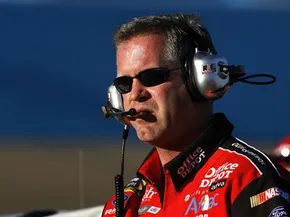
How #Crew Chiefs engineers won the race that changed the course of NASCAR
Being a crew chief in NASCAR is more than just a job. This is a high stress exercise in applied physics. Modern motorsport has evolved far beyond its dusty, moonshine-running origins. Today’s sport is a high-tech arena, and the line between engineering and athletics are blurring. We’re talking about 100,000-seat stadiums and wireless communications that enable instant decision-making. Some of the heat-shielding materials protecting drivers in the cockpit? These were originally designed for NASA.
The margin for error is microscopic. A slight tweak to the suspension. A gram of weight moved. A minor adjustment to the front fenders. These changes can completely rewrite the performance of the car at 200 mph. The task of the crew chief is to find that elusive edge. Just one edge. Enough to beat the guy next to you.
Every track demands a different approach. Take the Indianapolis Motor Speedway. It’s a tire killer. It eats rubber. Atlanta Motor Speedway is the fastest oval on the track, so the engineers have to carefully adjust the horsepower. There is no one-size-fits-all installation. Each vehicle’s crew must solve a unique puzzle before the green flag drops.
But cars are only half of the equation. The track itself is a living, breathing variable. The surface changes. The career is moving. Rubber has accumulated. If you think pre-race preparation is difficult, wait until the checkered flag flies.
Advanced racing surface
Asphalt is not static. It’s still evolving. They lie on the rubber when the car slides in a curve. This “career” became the most popular racing line. Provides greater holding power. Enables faster processing. Riders who follow this custom have an advantage. People who try to run high or low on a track often have trouble getting traction.
The weather also plays an important role. The sun warmed the truck. The shade helps reduce the coolness. Holding levels can change instantly as clouds pass. Hot roads accelerate tire wear. Teams must constantly monitor temperatures. Team principals must balance tire life with race pace. If you push too hard, the tire will deflate. If you relax too much, you will lose your position.
Track position is important. The car in front can determine the speed. They can choose their own route. They can stop pass attempts. However, as the game progresses, the surface wears away. The career deepens. The high side is less effective. Overtaking becomes more and more difficult. This is where strategy becomes important. Pit stops are important. You can make up for lost time by replacing your tires with new ones. But timing is everything. If you park your car in time, you will get stuck behind slow traffic. If you stop late, you may not have enough rubber to finish the race strong.
Fuel strategy adds extra complexity. How many laps can you run on gas in your car? Do you need to carry extra fuel to avoid premature stops? Every liter of fuel you drive slows your car down. The crew leader must calculate the optimal fuel load. They have to think about the pace of the game. They must anticipate yellow lights. Warning periods may cause the game to reset. This allows the team to make changes. It can change the dynamics of the whole event.
Next, the car itself. Aerodynamics is sensitive to damage. Curved fenders change the airflow. It reduces the compression force. the car comes off
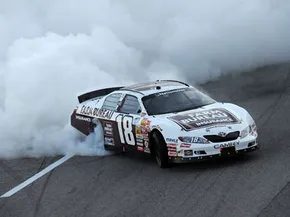

How friction transforms NASCAR tracks during a race
When 43 cars are hurling down a strip at 150 mph for 500 miles, physics doesn’t just apply to the engines. It applies to the ground beneath them. The sheer energy transfer is massive. The track changes. It has to.
This transformation is most violent on asphalt. With 28 of NASCAR’s 31 tracks paved in this material, the difference between asphalt and the three concrete circuits is stark. Technically, both are composites, but the binder makes all the difference. Concrete uses cement. Cement stays rigid. Asphalt uses heavy oils left over from crude petroleum evaporation. That makes it viscoelastic. It sits in a gray zone between solid and liquid.
Room temperature keeps it stable. But push it past 100 degrees Fahrenheit, and it starts behaving like a thick syrup. Friction generates that heat instantly.
The mechanics of track wear and rubber buildup
Torque pushes the car forward. Rolling friction fights back. That resistance creates heat. As the asphalt binder softens, the surface becomes slick. It feels oily. Handling the corners becomes a nightmare. This is why Martinsville Speedway kept its corners in concrete while paving the rest in asphalt—the corners take the biggest beating.
But there’s a silver lining. As the asphalt wears away, the aggregate underneath is exposed. The racing tires, heated and malleable, grab onto this rough texture. They tear off small chunks of rubber that stick to the track. Darlington Raceway is infamous for this. Its aggregate included seashells. It chewed through tires like nothing else.
More rubber means better traction. Drivers go through more tires, sure. But grip is the holy grail in stock car racing.
When rain resets the board
Rubber doesn’t stay forever. A heavy rain washes it all away. The track goes “green.” Bare asphalt. No grip. High risk. But NASCAR races don’t stop for weather delays. Once the cars start again, the rubber comes back. Lap after lap, the surface rebuilds. The gate to high-speed racing opens again.
Lots More Information
Related HowStuffWorks Articles
-
How NASCAR Works
-
How NASCAR Race Cars Work
-
The Top 10 Daytona 500s Ever
-
NASCAR Race Car Tracks
-
NASCAR Quiz
More Great Links
-
NASCAR.com
-
NASCAR on ESPN
-
NASCAR Origin and History
Sources
-
Borden, Bill. “Goodyear touts ‘a lot of communications’ between engineers, NASCAR, teams.” ESPN. October 10, 2008. http://sports.espn.go.com/rpm/nascar/icons/news/story?id=3634726
-
Borden, Bill. “Tire management holds race results in the balance.” ESPN. June 21, 2007. http://sports.espn.go.com/rpm/news/story?series=2&page=nascar101/tiremanagement
-
Borden, Bill. “Trying to control racing’s friend, foe.” ESPN. June 28, 2007. http://sports.espn.go.com/rpm/news/story?series=2&id=2959572
-
Davis, John. “Asphalt for race tracks.” Asphalt Institute. Summer 2004. http://www.asphaltinstitute.org/Upload/Race_Tracks.pdf
-
Johnson, Andy. “Tire and asphalt melting.” Argonne National Laboratories. February 15, 2004. http://www.newton.dep.anl.gov/askasci/eng99/eng99259.htm
-
Leslie-Pelecky, Diandra. “Why do asphalt tracks change during a race?” Stock Car Science. http://www.stockcarscience.com/scienceTopics/scsTrack_Asphalt.php
-
Price, Jeffrey. “Intermediate track analysis.” KFFL. February 7, 2008. http://www.kffl.com/article/55599/539
-
“F1 tyre talk: when the going gets rough.” Bridgestone. July 1, 2008. http://www.paddocktalk.com/news/html/modules.php?op=modload&name=News&file=article&sid=88165
-
“From moonshine to major sport.” NASCAR. February 25, 2004. http://www.nascar.com/2004/promos/2004/imax/02/25/sport_history/
-
“Lime facts.” Cheney Lime and Cement Company. Accessed November 10, 2008. http://www.cheneylime.com/limefact.htm
-
“Martinsville Speedway.” Fox Sports. Accessed November 10, 2008. http://msn.foxsports.com/nascar/track?trackId=14
-
“Meeting the NASCAR team.” Dummies.com. February 2005. http://www.dummies.com/WileyCDA/DummiesArticle/Meeting-the-NASCAR-Team.id-61.html
-
“Other lists: assorted miscellany.” NR Tracks. Accessed November 10, 2008. http://www.nrtracks.com/other_lists.html
-
“The NASA/NASCAR connection.” NASA. May 9, 2002. http://www.nascar.com/2004/promos/2004/imax/02/25/sport_history/
-
“Viscosity.” University of Hawaii. Accessed November 10, 2008. http://www.spacegrant.hawaii.edu/class_acts/ViscosityTe.html


