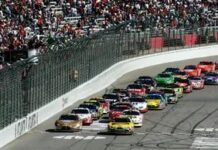
The bootleggers knew the hills of the southern Appalachians better than anyone. During Prohibition, they weren’t just hauling moonshine. They were racing against the law. Dark mountain passes became their playground. Trunks bulged with illicit liquor. Engines roared to outrun deputies. This need for speed didn’t end when the government stopped making booze. It just changed targets.
Drivers started testing their modified machines against each other. They wanted to see who had the fastest ride. The result was stock car racing. These weren’t fancy prototypes. They were production cars, souped up for dirt tracks and high stakes. By 1948, Bill Francis Sr. saw the chaos. He founded NASCAR, the National Association for Stock Car Racing. His goal was simple. Create rules. Unify the sport.
But early NASCAR had very few rules. The spirit of the bootlegger remained. Drivers wanted an edge. If you aren’t first, you’re last. It is a brutal truth on the track. Teams looked for ways to bend the regulations. Some crossed the line into blatant cheating. Others stayed in the gray area. The line between innovation and cheating is often blurry.
“Smokey estimated that by 1970, more than half of NASCAR’s rules were devoted directly to the efforts of his mechanical machinations.”
Consider Henry “Smokey” Yunick. He was a mechanical genius. He understood engines better than anyone. But he also understood loopholes. There is a famous story about Yunick. Inspectors pulled the gas tank from his car for a closer look. Standard procedure. But Yunick didn’t panic. He drove the car back to his garage from the track.
How did he do this? He used a hidden fuel line. It was 11 feet long. That is about 3.4 meters. The line held an extra six gallons of gas. Nearly 23 liters. It was technically legal. The tank was inside the car. The fuel was just further away. But it gave him a massive advantage. He could refuel mid-race without losing time.
NASCAR reacted quickly. They added specific rules to stop this trick. Yunick reportedly said that by 1970, half of all NASCAR rules existed because of his antics. He viewed it as a job well done. The game changed because of his ingenuity.
This brings us to a broader question. How do teams gain an advantage in stock car racing today? Is it still about hidden fuel lines? Or has the sport evolved? We will look at the nefarious and not-so-nefarious ways to win. Some methods are easy to get away with. Others get you banned. The history of NASCAR is full of these stories. They show how far teams will go. The quest for speed never stops.
The Gray Area
The gray area is where innovation meets regulation. It is not always clear cut. Some teams push the limits. Others exploit technicalities. The goal remains the same. Win the race. But the methods vary. We will explore these strategies next. The story of NASCAR is a story of constant adaptation. Rules change. Tactics evolve. The drivers keep pushing.

The days of NASCAR inspection were far less rigorous than they are today. Back then, the goal was simple: extract every ounce of speed from the machine. Mechanics didn’t just follow the manual; they hacked it. If a rulebook didn’t explicitly ban an idea, they ran with it. Sure, there was always the safety net of Rule 12-4-A, a vague catch-all clause against “actions detrimental to stock car racing.” It was the escape hatch officials used when they needed to shut down something clever but technically legal. Whether you call it cheating or genius depends on which side of the pit wall you’re standing on.
Let’s look at how teams used to game the system.
Weight Games and Template Tricks
Minimum weight rules exist to prevent unfair advantages. A lighter car accelerates faster and handles better. So, how did Smokey Yunick solve the mass problem? He filled the chassis with wet sand. The car passed inspection. The next morning, after the sand had dried out completely, he simply poured it out. Lighter car, faster lap times.
Yunick also tried to fool the inspectors with the templates—the rigid frames used to verify a car’s dimensions. He borrowed one of NASCAR’s official templates and, instead of measuring his car against it, he ground the template down. Slightly smaller. His car would now fit inside a “smaller” box. It worked until another driver happened to pull up with an identical make and model. The inspector had nothing to compare Yunick’s car to, and the scheme collapsed immediately.
The Early Innovation Playground
These weren’t isolated incidents. Teams were constantly experimenting with materials and mechanics.
- Lightweight aluminum frames replaced heavier steel structures.
- Fiberglass hoods shed weight from the front end.
- Nitrous oxide injection gave engines a temporary burst of horsepower.
- Weighted tires were used to meet minimum weight requirements during inspection, then swapped for lighter rubber during the first pit stop.
If they could dream it up, they tried to make it legal.
When Yellow Flags Are Too Slow
Modern NASCAR is tighter, but the desire to manipulate race conditions hasn’t vanished. Sometimes, the race is too green. Drivers need a caution to restart in a better position, to cool down tires, or to pit under safer conditions. If the yellow flag won’t come out naturally, some drivers manufacture it.
Intentional spins are one way to force a caution. It’s a risky move that can cost positions or cause crashes, but the timing can be strategic.
Others have gone further. Deliberately littering debris on the track is another method to slow the field. It sounds extreme, but in the heat of competition, creating a hazard is an effective way to bring out the yellow. It’s not about speed anymore; it’s about control.
These tactics blur the line between creativity and rule-breaking. The rules get tighter every year. The ingenuity gets sharper.

The Cost of Cutting Corners in Stock Car Racing
The days of open-wheel brawls and unregulated aggression are gone. NASCAR isn’t what it used to be. Money changed that.
When a sport becomes a global cash cow, the rules tighten. Sponsors hate bad press. They don’t want their brands tied to teams that look like criminals. So when NASCAR tried to sanitize the culture, it didn’t work. Instead, it created a new reality. Teams are now accused of cheating daily. Most deny it. The public doesn’t buy the denials. The effort to clean up the image backfired. Now, the label of “cheater” sticks faster than ever.
How Tight Regulations Drive Loopholes
The Car of Tomorrow killed the old way. Every Cup Series team runs the same cookie-cutter chassis. Construction specs are a straitjacket. Crew chiefs have no room to innovate. When they find a way to squeeze out extra speed, officials call it foul play. Competitors call it racing.
If flaring a fender isn’t explicitly banned, why not use it? It adds speed. That’s the logic. NASCAR disagrees. The rulebook is vast. The gray areas are shrinking.
Penalties That Hurt the Wallet and the Standings
The crackdown is real. Fines exceed $100,000. Suspensions last weeks. But the financial hit is nothing compared to the points loss.
Losing 150 points is catastrophic. That’s the value of a sixth-place finish. It can erase a championship challenge. Teams are docked for post-race failures too. Even accidental alterations during a race can trigger penalties. The scrutiny is intense. The margin for error is zero.
Is It Actually Harder to Cheat?
Stiffer penalties don’t stop cheating. They just raise the stakes. With more rules, getting caught is easier. But the urge to win doesn’t vanish.
Some teams tone down their tactics. They fear the crackdown. Others double down. They ignore the new era. They still bend the rules. Some illegally lighten their cars by altering metal. Others rig fuel tanks to fake fullness during qualifying. They do what it takes.
The answer to whether cheating is easy depends on the specifics. How blatant is the violation? How sharp is the inspector? And where does the individual draw the line? Some infractions are obvious. Others are subtle. Some are accidental. The definition of cheating remains subjective. The game continues. The suspicion lingers.
The Gray Area of NASCAR Rules and Penalties
If you think you’ve got a handle on how NASCAR polices its own backyard, think again. The penalty system isn’t just a rulebook; it’s a shifting landscape of interpretation, precedent, and sometimes, outright controversy. Why is it so hard to understand the NASCAR penalty system? Because the line between “competitive adjustment” and “cheating” moves.
Take the debate over NASCAR wedge adjustments. Teams spend hours tweaking the rear wedge to get the car to turn, but when does that become an illegal modification? It’s a gray zone that changes every race weekend. Then there’s camber. Why is camber so critical in NASCAR? It’s not just about tire wear; it’s about how the car grips the track through a corner. Mess with it wrong, and you might be speeding. Mess with it right? You might be breaking a rule nobody talks about until it’s too late.
The Evolution of the “Car of Tomorrow”
The introduction of the NASCAR Car of Tomorrow didn’t just change the look of the cars. It changed the rules. The geometry shifted. The safety standards tightened. And with that came a new wave of scrutiny. Did this innovation kill the creativity of the garage? Some say yes. Others say it made racing safer and more equitable.
But here’s the thing: the evolution of stock cars has always been driven by rule-bending. It’s in the DNA. From Smokey Yunick’s legendary tweaks to modern-day data analysis, teams have always looked for that 0.1-second advantage. The difference now is the digital footprint. You can’t just shave weight off a car like Red Bull allegedly tried to do without leaving a trace.
Inside the Appeals Process
When NASCAR hands down a penalty, it’s rarely the end of the story. The NASCAR Commission hears appeals. They review the data. They look at the precedent. Remember the Sauter team appeal? Or the Myers appeal from Martinsville? These aren’t just administrative tasks. They’re legal battles played out in conference rooms, not on the asphalt.
“The rulebook is the same for everybody,” they say. But does it feel that way when your competitor’s car is three inches lower?
Historical Context: Cheating Then and Now
Is cheating today harder to do? Yes. Technology has made detection easier. But it hasn’t made it impossible. Look at the Top 5 Cheaters in NASCAR History. It’s a list that reads like a who’s who of garage legends. It’s not just about getting caught; it’s about the culture. For decades, fudging the rules was part of the sport. A tradition, some would argue.
Now, with stricter enforcement and more eyes on the garage, that tradition is dying. But does it kill the fun? Some fans think so. They argue that the rules taking the fun out of things is a direct result of over-regulation. Others say it’s the only way to keep the sport fair.
Where to Go From Here
If you want to dig deeper, don’t just read the headlines. Look at the sources. Check the Stock Car Racing Collection at Appalachian State. Read Caraviello’s breakdown of the Smokey Yunick era. Understand that NASCAR isn’t just a sport; it’s a legal, engineering, and cultural puzzle.
The NASCAR racecar is a machine. The stock car is a legend. But the system that governs them? That’s a living, breathing, often frustrating entity. And it’s only going to get more complex.
So next time you see a penalty flag, don’t just shake your head. Ask why. Ask how. Ask who got away with it last week. Because in NASCAR, the answer is never simple.