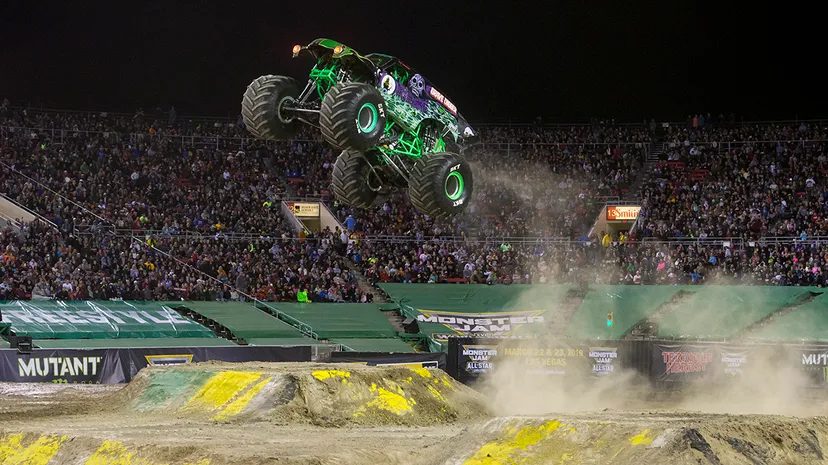
The growth trajectory of Monster Jam is a masterclass in brand evolution, one that most motorsports organizations would kill to replicate. Nowhere is this more visible than at the Monster Jam World Finals. Held annually in late March at Sam Boyd Stadium in Las Vegas, this event has long been the sport’s Super Bowl. Starting in 2019, the formula shifts. The stadium stays, but the date moves and the location rotates, signaling a new era for the touring spectacle.
The story begins in the 1970s with the modified monster truck trend. Bigfoot was the original icon. A video of Bigfoot crushing cars drew the eye of a promoter. That clip sparked the first official monster truck shows at tractor-pulling events in arenas. Other trucks followed. The sport grew. In 1995, the United States Hot Rod Association established Monster Jam. Feld Entertainment took the reins. They transformed a niche stunt into a thriving, international, family-friendly juggernaut.
Traditional racing or motocross offers distance between the fan and the machine. Monster Jam breaks that barrier. Fans get unprecedented access to star athletes. Even more importantly, they access the trucks. These vehicles are arguably the true stars. This fan-driven culture fuels significant growth. The league now hosts 350 events a year across 30 countries. Multiple tours run simultaneously around the globe.
Feld Entertainment pushed hard on international expansion starting in 2012. The momentum built. By 2017, they had a record-breaking year. Events hit Saudi Arabia, Argentina, Singapore, and China for the first time.
But Las Vegas remains the heart. HowStuffWorks recently went behind the scenes at the World Finals to see what keeps the machine running. The event spans two days. Representatives describe it repeatedly as “controlled chaos.” Day one focuses on the racing series finals. Day two shifts to freestyle. Drivers bust out their best tricks to impress the crowds. We will dig into those competitions later.
While fans watch, hundreds of employees work behind the curtain. They monitor driver safety. They choreograph entry into the hot pits. Forty-seven trucks stage there. Two trucks enter and exit at all times. Staff attend to broken trucks on and off track. They ensure everyone has a blast.
Keep reading to learn about the tracks, the pits, the drivers, the trucks, and the rabid fan culture that sustains it all.
It’s Totally Family-Friendly
Monster Jam trucks don’t hit the pits until sunset. The World Finals is still an all-day extravaganza for families. Kids line up to chat with favorite drivers. They get closer looks at the behemoths. They learn to ride dirt bikes or ATVs. Adults ride in the back of trucks built for passengers. Others race remote-control cars on a scale model of an official track.
Meet Some Monster Jam Drivers
Becoming a star in Monster Jam isn’t just about having a loud engine and a tough skin. It’s a grind that demands specific skills and, increasingly, formal education. I sat down with two very different voices from the circuit to understand what it actually takes to survive behind the wheel of a 12,000-pound behemoth.
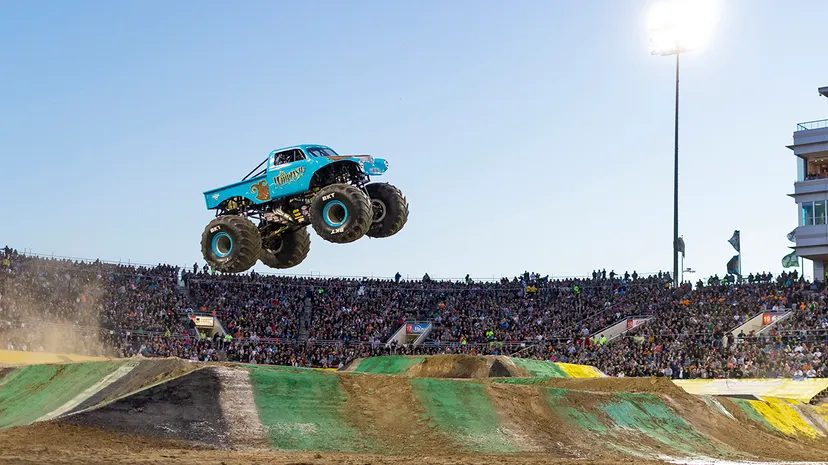
First up is Brianna Mahon, the 2015 Rookie of the Year. Her path to the spotlight was anything but linear. A professional motocross career derailed by injury forced her to pivot. She landed in the driver’s seat of Whiplash, a truck that mirrors her own dual nature. As an only child, she balanced the roles of “princess” and “tomboy,” a dichotomy reflected in the truck’s bright aqua, Western-themed, pickup-style design. It’s not a gimmick. It’s genuine.
Mahon is quick to dispel the myth that the shows are scripted. They aren’t. The competitions are raw and real. More importantly, the playing field is level. Unlike motocross, which she describes as less friendly to women on and off the track, Monster Jam treats female drivers as equals.
“They want us here. They want us to compete with each other,” Mahon says. “Every year we’re breaking more records with women.”
The numbers back her up. There are currently 14 women on the 83-driver roster. The trend is accelerating. The crowd energy shifts when a female driver takes the stage, creating a unique atmosphere that Mahon clearly thrives in. It’s a fresh change of pace, both for the athletes and the fans.
The New Standard: Inside Monster Jam University
If Mahon represents the rising tide, Tom Meents represents the foundation. A veteran with 25 years in the game, Meents is best known as the driver of Maximum Destruction and an 11-time Monster Jam World Finals champion. Recently, he stepped into a new role: head of Monster Jam University.
Located in central Illinois, this facility is where the organization evaluates and tests new talent. Before Feld Motor Sports acquired the brand, there was no formal training program. Now, it’s mandatory. You can’t join the circuit without it. Not even Meents’ own sons were exempt.
So, what does it take to pass? According to Meents, hopefuls should expect a rigorous gauntlet.
- The Audition: A three-day period where prospects are put through their paces.
- Initial Training: Half a day dedicated to fitting into the truck and learning basic operations.
- Safety Protocols: A full day focused entirely on safety procedures.
- The Grind: If they pass, it’s a minimum of nine days, eight hours a day.
The curriculum is intensive. Drivers watch videos of their own performances, dissecting what they did right and, more importantly, what they got wrong. Meents notes that this week-long training session is equivalent to three years of real-world event driving. The training mimics exact event conditions, using trucks with identical specifications on both stadium-style and arena-style tracks.
The results speak for themselves. Of the 130 applicants tested so far, 77 have completed the training. Roughly 32 have secured jobs with Monster Jam. It’s a steep filter, but it ensures that the drivers on the track are prepared for the chaos.
The Independent Circuit
Not everyone on the tour works for Feld Motor Sports. About 30% of the trucks are classified as “independent.” These teams are hired to fill out the roster as the tour expands into different markets.
The dynamic here is different. Official Monster Jam trucks are designed, built, and maintained by the company. Independent drivers are responsible for their own rigs. Technically, these trucks don’t have to conform to official standards, but most do. Why? Access.
Building an independent truck to official specs grants the driver and their crew access to Monster Jam’s resources. Need an emergency part at an event? The official support network is there to help. It’s a pragmatic arrangement that allows freelance drivers to operate with a level of professionalism and safety that matches their employed counterparts.
Why It Matters
The evolution of Monster Jam from a spectacle to a structured sport is evident in these changes. The emphasis on safety, formal training, and equitable treatment for all drivers creates a more sustainable ecosystem. For fans, it means higher quality performances. For aspiring drivers, it means a clear, albeit difficult, path to the top.
Mahon’s success and Meents’ mentorship highlight a shift in culture. Women aren’t just participating; they’re leading. Veterans aren’t just driving; they’re teaching. The truck is just metal and engine until a driver breathes life into it. The question now isn’t just who can drive the fastest. It’s who can handle the pressure, the safety, and the spotlight. The circuit is getting deeper. The stakes are higher. And the competition is fierce.
The roar of the crowd fades, but the engines keep running. What happens next depends on who’s willing to put in the hours.
If you think Monster Jam is just about loud engines and crushed cars, you are missing the engineering marvel underneath. These 12,000-pound behemoths are not just toys with big tires. They are精密 crafted machines that cost nearly a quarter of a million dollars to build from scratch. The labor is insane. Take the Grave Digger. It takes 60 man-hours just to build one version of that truck. You can watch it get destroyed in a matter of minutes on the track. It is a cruel irony.
The Cost of Design and Destruction
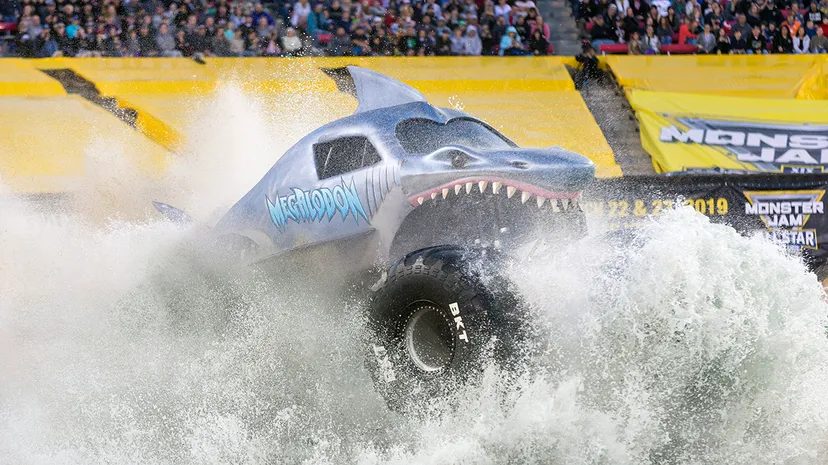
Not all trucks are built the same way. The Megalodon, Grave Digger, and Maximum Destruction designs are some of the most labor-intensive. Most teams slap vinyl decals on their frames. Grave Digger is different. Those designs are hand-painted. It adds time. It adds cost. It adds prestige.
When these trucks hit the dirt, the impact is terrifying. They land with a force of 240,000 pounds. That is 108,862 kilograms of kinetic energy slamming into the ground. And yet, the repair crews are faster than you would think. During the World Finals, teams have repaired eight damaged bodies overnight. From the first day to the second. Just like that.
Transporting them is a logistical puzzle. You cannot fit a 66-inch tire into a standard trailer. So, teams use smaller tires for the road. It allows the trucks to fit inside tractor trailers. Simple, but effective.
Breathing Methanol
Under the hood, these beasts scream. The supercharged engines run on methanol. They are rated for 1500 horsepower. That is a lot of power for a vehicle that weighs as much as a small bus.
Most trucks have rear-mounted engines. This isn’t just for balance. It allows them to fly through the air better. The weight distribution changes how the truck behaves mid-jump. It makes the stunt cleaner.
Fuel injection is coming. Some trucks use it now. All might use it in the future. It is a shift toward precision. Methanol is volatile. It burns clean, but it demands respect.
The Tires That Define the Sport
The tires are not off-the-shelf parts. They were designed specifically for Monster Jam by BTK in India. They are massive. 66 inches tall. 43 inches wide. They cost $2,500 apiece.
Their lifespan is unpredictable. One tire might last one event. Another might last 10 years. It depends on how hard the driver pushes it. It depends on the track conditions. It depends on luck.
“The tires are the only thing connecting the driver to the ground. If they fail, the stunt fails.”
Inside the Cockpit
For all that money and engineering, the inside is surprisingly simple. The driver does not sit in a comfortable chair with a view. They climb under the body panels. Then they climb up the frame. It is a tight fit.
The steering wheel has a quick-release feature. Why? To give the driver a little more room to escape if things go wrong. It is a safety net in a metal box.
The seats are center-mounted. Custom-fitted for each driver. They use five-point racing harnesses. This keeps the driver firmly in place during stunts and crashes. The cockpit is open at the bottom, but it is fitted with plexiglass for protection. So the driver can see the track looking straight ahead or down at the ground.
The controls are basic, if oversized. The gas and brake pedals are normal. The gearshifts are different. The two-speed automatic transmissions are floor-mounted. They are hard to see. So drivers need to learn to shift by feel. Muscle memory takes over.
The instrument panel is sparse. Oil pressure. Temperature. Voltage. Gauges that tell you if the engine is about to die. Power and fuel kill switches are within reach. But track safety personnel can also kill the power and fuel remotely. If a truck is out of control, the switches flip from the pit.
Three fire extinguishers are onboard. One in the cab. Two aimed at the engine. They can be activated by switch. It is a small detail. But in a sport where engines explode, it is a big deal.
Steering Both Ways
Finally, the
While the hot pit holds the drivers and their machines during the live show, it’s the cold pit where the real magic of preparation happens. Only authorized crew members enter the hot zone for safety, but the cold pit in Las Vegas offered a rare glimpse into the logistical backbone of the sport. This area housed trailers, supplies, and teams supporting 83 trucks. It wasn’t just a parking lot. It was a factory.
The Million-Dollar Parts Tent
One corner of the cold pit features a meticulously organized parts tent. Estimates suggest this inventory holds a million dollars in custom-made components. You’ll find wheels, tires, motors, frames, and sheets of plexiglass ready to be cut into fresh windshields.
Move a few steps further, and the order breaks down. You might turn a corner and stumble upon a pile of stray body parts. Zombie’s arms lay nearby. Megalodon’s fins rest on the ground. Maximum Destruction’s spikes are scattered about. It looks chaotic, but it’s just the aftermath of high-impact stunts.
Maintenance as a Science
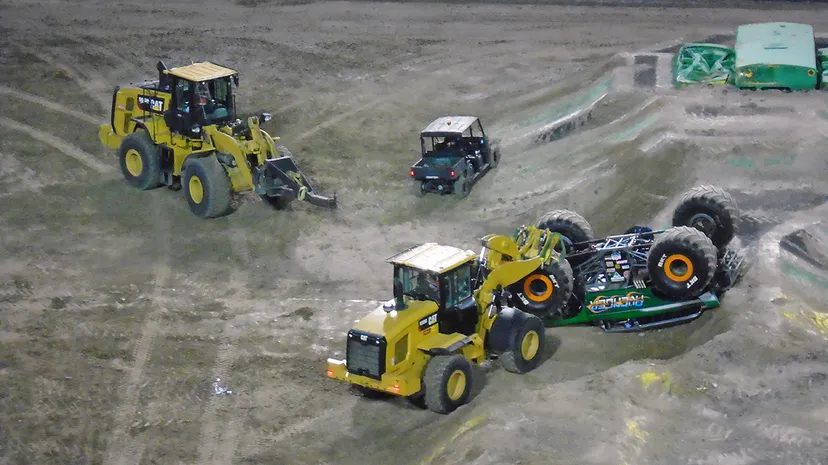
Maintenance is constant. Drivers feel the vibrations. They know when something is breaking or already broken. During freestyle events, very few trucks make it back to the pits under their own power. They are towed.
Despite their unique appearances, the trucks share a common genetic code. They are built on identical base parts. This uniformity simplifies everything. The inventory is a shared pool. Teams use what they need because the reality is that trucks get trashed nightly. They require extensive repair during the day.
Everything in the fleet is interchangeable. This allows maintenance teams to treat repair as a precise science.
A blown motor can be swapped out in about two hours. One person can replace one of those giant tires in just a few minutes.
Small parts see the most turnover. Unusable or unrepairable items don’t just get thrown away. They are recycled. Given to charity. Provided to sponsors. Or sold.
Evolving Designs and Safety
The basic truck design does evolve. Stunts get more daring. Components are redesigned to help drivers perform safely while pushing limits. The United States National Hot Rod Association sets safety regulations for Monster Jam. When rules change, the sport adjusts quickly.
The cold pit isn’t just a repair shop. It’s the engine room. It keeps the spectacle moving. The parts tent stays full. The motors stay fresh. The trucks stay ready.
What happens when a tire blows mid-stunt? The crew is already there. Waiting. Ready.
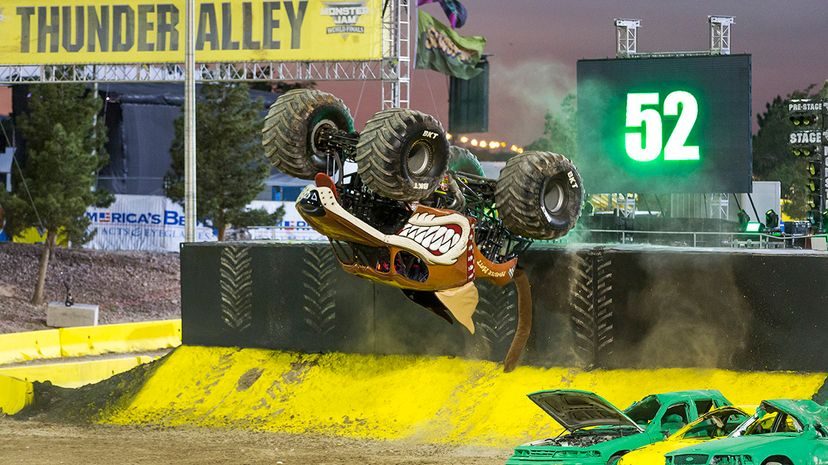
The Split-Track Format of the World Finals
Monster Jam doesn’t do one thing well. It does two things perfectly. Racing. Freestyle. The World Finals mashes them together, forcing drivers to pivot from bracket fury to crowd-pleasing chaos in a single weekend. In 2018, the racing finals hit the dirt on Friday. The freestyle madness took over Saturday.
Racing is pure adrenaline. It’s bracket-style. Symmetrical dirt track. Two drivers. One light.
They stage in Thunder Alley. When the light turns green, they launch. First to the finish line advances. False start? You lose. Truck breaks down mid-course? You lose. No second chances.
Stunts? Useless here. But the track demands at least one jump. So fans still get destruction. Photo finishes are common. The track uses the same high-speed cameras found in the Olympics. It’s that close.
Freestyle: Let the Fans Decide
Freestyle is different. More obstacles. Fewer rules.
Drivers are encouraged to excite the crowd. Any way they want. As long as safety guidelines are met. The winner? The fans.
After each two-minute run, the audience has 20 seconds. They log onto a website via smartphone. Score the run on a scale of one to ten.
“Freestyle is two minutes of do whatever you want. There are no rules,” says Tyler Menninga, Grave Digger driver and 2018 Freestyle of the Year winner. “Anyone can win here.”
Stunts: Evolution and Improvisation
Stunts have come a long way. Especially in the last few years.
Drivers watch each other. They’re in awe. Seeing colleagues do things they didn’t think were possible. Like the nose wheelie.
Balancing 12,000 pounds (5,443 kilograms) on the front end. Shifting from forward to reverse. Drivers say they can’t see anything except the dirt. They shift by feel. Can’t see the shifter.
“When I started in ’93, I never thought we’d be doing stunts like this,” Meents says.
Mahon, driving Whiplash, calls the back flip “a whole lot of luck and hitting [the ramp] just right.”
“I kind of shut my brain off. I just kind of do; I don’t really think about it.”
The Art of the Unplanned Run
Drivers plan a few stunts. Usually. But things don’t always go as planned.
Improvisation is key. Staying calm is crucial.
“You may plan a couple things, but if you get off track it’s hard,” Menninga says. “If you think, it’s already too late.”
Todd Leduc, who drives Monster Energy, puts it simply.
“Every show is different and you can do the same jump six times in a row and every time you land differently. It’s a lot of just waiting on the truck to settle.”
The truck settles. The crowd holds its breath. Then the next run begins.
Digging Deep into Dirt Logistics
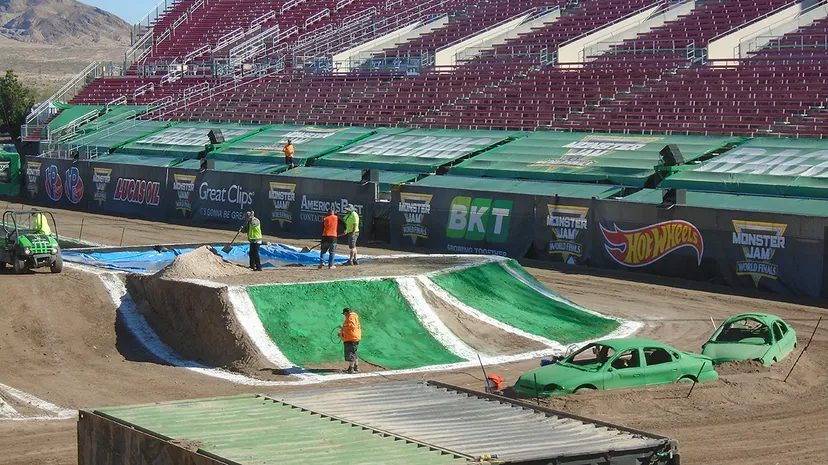
The party isn’t over when the lights go down. While the crowds disperse, the real work begins. Over a standard two-day event, the track doesn’t just sit there. It gets torn apart, reshaped, and rebuilt from scratch overnight. The first day’s layout is engineered specifically to make swapping to the second day’s configuration as painless as possible.
This isn’t guesswork. Monster Jam University is where the magic happens. It’s a testing ground for different soil types and track geometries. The goal? To ensure every city on the tour sees a fresh, evolved design rather than a recycled copy-paste job.
Dan Allen, the senior director of track construction, runs a massive operation. Here is what it actually takes to build a Monster Jam track:
- The Army: More than 100 crew members work the day and night shifts.
- The Volume: World Finals tracks require 351,000 cubic feet of dirt. That is 13,000 cubic yards.
- The Backup: An extra 54,000 to 81,000 cubic feet is kept on hand for the second day’s overhaul.
- The Dust Control: 50 to 100 truckloads of water are mixed in to keep the air breathable.
- The Depth: Dirt sits at a precise 8 to 10 inches deep.
- The Props: Crush cars are sourced locally for each event. You won’t find the same sedans jumping in Cleveland as you will in Chicago.
- The Risk: The team pays for any damage to the venue’s field or floor during construction.
Why Experience Matters More Than Specs
Allen doesn’t just hire anyone with a shovel. He prefers former motorsports racers. Specifically, those who have built their own practice tracks. Why? Because experienced hands can literally feel the track. They know how it should be built before the first bucket of dirt hits the ground.
Getting the dirt right is a balancing act that defies simple logic. Too sandy? You get a windblown mess. Too hard? The surface becomes slippery ice. Too soft? The trucks dig in and stall out.
To fix this, the crew walks every inch of the track with an industrial-sized mixer. They add a silica flake mix. This additive bonds the dirt together, creating a surface that holds its shape under the weight of 15,000-pound monsters.
The Logistics Nightmare
Adding a new city to the tour breaks the rhythm. Sourcing dirt locally is standard, but storing it is a logistical headache. Some venues help. Las Vegas gave Monster Jam acres of land for retrieval.
Others make it harder. In Anaheim, California, the team bought storage space on the stadium property. It required fencing off 200 parking spots. Stadium employees had to park on top of the dirt pile.
Tampa offers a different solution. They store the dirt in a giant hole. Then, they cover it with sod. If you visit the stadium for a game, you might be parking on Monster Jam’s dirt, hidden beneath a layer of grass.
Monster Jam Fans and Culture
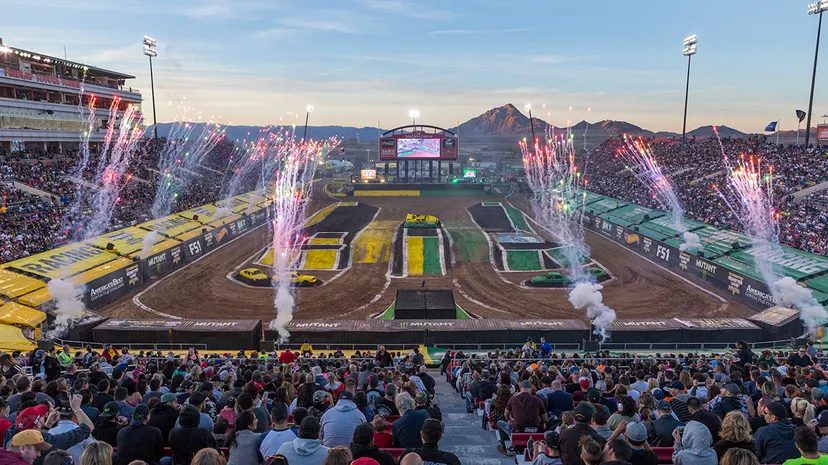
The Crowd That Drives the Industry
The engine of Monster Jam doesn’t just run on fuel. It runs on people. And the people show up.
The fanbase is a mix. Adults come without kids. Kids come with parents. Everyone comes. It’s family-friendly by design. That strategy works. It pulls in a crowd that spans generations.
But look closer at the stands. It’s not just a kids’ show. Monster Jam says the gender split is roughly 50/50. Men. Women. Equal. Why? Because the drivers are mixed.
In most motorsports, women compete separately. Different series. Different trucks. Different rules. Monster Jam doesn’t do that. Women drive the same big rigs as men. They jump the same jumps. They compete on the same dirt.
It’s a mental sport, not just a physical one.
Strength matters. Endurance matters. But the gender gap shrinks when the playing field is identical. There’s no biological advantage that decides the winner here. Skill does. Strategy does.
This unity extends globally, too. The brand is pushing hard outside the US. New tours launch in Latin America. Europe. Africa. Asia Pacific.
The language barrier doesn’t matter. You don’t need to understand the announcer to feel the shock of impact. You don’t need the words to know when a truck hits the apex of a ramp. The thrill is universal. That’s how they grow. That’s how they diversify.
Merch: More Than Just Toys
Fans don’t just watch. They buy.
Monster Jam knows this. They monetize the culture. Hard.
Mattel makes toys. Walmart stocks them. SpinMaster licenses the brand. But it’s not just action figures.
The merchandise list is weird. It’s wide. It’s profitable.
You can buy 24-volt ride-on trucks. You can buy wind chimes. Yes. Wind chimes.
Why wind chimes? Because it’s a brand ecosystem. If you love the noise, the shake, the chaos, you want a piece of it in your house. Even if that piece is a chime that makes a metal clank when the breeze hits.
It’s a smart play. It keeps the brand visible. It keeps the revenue flowing. It turns casual observers into collectors.
Green Machines?
The future looks different. Not just in who drives, but in what they drive.
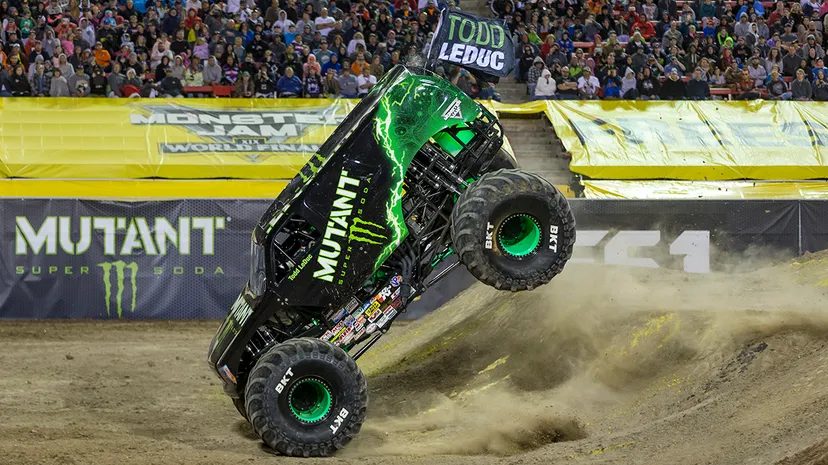
Diesel Diesel: The Smoky Transition
The rumble you hear isn’t just noise anymore. It’s the sound of an industry pivoting. Monster Jam is pushing hard to broaden its appeal, and sustainability isn’t just a buzzword—it’s a mechanical necessity. The sport is ready to change how it powers these 10,000-pound beasts.
The first major shift? Diesel engines.
It might seem counterintuitive for a show built on chaos and methanol fumes. But diesel burns cleaner and more efficiently. The process has dragged on a bit, slower than the original timeline, but the logic holds up. For the drivers, the feel remains largely unchanged. Sure, diesel has a reputation for lagging on the takeoff, but in a sport where launches are often short and violent, that split-second delay rarely ruins the show.
Indoor shows pose a different challenge. Diesel smokes. A lot. Monster Jam claims it has the engineering to manage that telltale plume, ensuring the air inside a packed arena stays breathable.
The drivers are on board, mostly. Todd LeDuc, behind the wheel of Mutant, is pragmatic. He’s open to the switch if it helps the sport survive and thrive. Others? They’re already living it.
“I’m excited for it,” says Mahon, driver of Whiplash. “I drive a diesel back home so that’s my thing.”
Mahon’s comfort with the transition highlights a key point. This isn’t about forcing drivers into alien tech. It’s about refining what already works.
Electric Futures and International Pressure
Electric monster trucks? They’re coming. Just not tomorrow. Bill Easterly, vice president of operations at Feld Motor Sports, confirms the company has been talking to EV experts. The adjustments needed to make a monster truck go electric?
“It’s not hard at all. We know it can be done.”
The timeline is fuzzy, though. Why the delay? It’s not just engineering. It’s the global stage. Monster Jam’s recent expansion into international markets is the real catalyst here. Those markets have different infrastructure. They have different environmental standards. And crucially, they have different fan expectations.
The green footprint initiative is gaining traction because the fans want it. It’s demand-driven. If Monster Jam goes fully green, it’s because the audience in London, Tokyo, or Sydney is asking for it.
So, where does that leave the methanol engines currently roaring on tracks across the country? They’re on borrowed time. The diesel trucks are the bridge. The electric ones are the destination. And the drivers? They’re just trying to keep the tires straight while the world changes beneath them.
Does it matter if the smoke is blacker or the exhaust is silent? For now, the dirt is still dirt. But soon, the way we watch it might change completely.