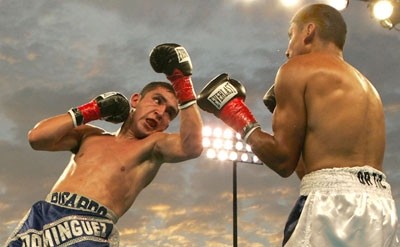
Boxing doesn’t get simpler than this. Two people. Fists. One walks out, the other might not.
But don’t let the simplicity fool you. Underneath that basic premise lies a sport stacked with centuries of history, a parade of outrageous characters, and enough controversy to fuel a hundred documentaries. It’s a potent mix of glory, tragedy, and raw physical will.
We’re breaking down the fundamentals here. You want to know how a match ends, what the weight classes actually mean, and why the sport remains so dangerous despite all the regulations.
The Arena and The Rules
First off, a boxing match is not a street brawl. There are strict protocols designed to keep the fight interesting and, crucially, to prevent serious injury. The rules shift slightly depending on whether you’re watching amateur Olympic bouts or professional fights. Even among pro organizations, there are nuances. Before every major card, a rules meeting happens. The referee explains the specific constraints for that night’s fights.
The ring itself is a raised, square platform. It’s covered in canvas with about an inch of padding underneath. Flexible ropes enclose the space, tied to steel posts at each corner.
Size matters here. The dimensions depend entirely on the sanctioning body.
* Smaller venues might feature a ring just 16 feet to a side.
* Olympic boxing allows rings up to 20 feet in diameter.
* Some professional organizations push it to 25 feet.
Inside those ropes, behavior is heavily policed. You can’t just hit wherever you want. Violations lead to point deductions. Repeat or flagrant fouls mean disqualification.
Here is what you absolutely cannot do:
- Strike below the belt
- Hit an opponent who is down on the canvas
- Kick
- Strike with elbows, forearms, or the inside of the hand (slapping)
- Head butt
- Bite ears (Mike Tyson proved this needed to be explicit)
- Grab the ropes for leverage
- Poke the eye with a thumb (Muhammad Ali’s right eye was swollen red after a George Foreman eye poke in the 174 “Rumble in the Jungle”)
- Wrestle or grapple excessively
Rounds and Gear
Time is the enemy and the ally. Rounds are short bursts of violence.
Professional championship bouts go for 12 rounds. Each round lasts three minutes. There’s a one-minute rest period between them. Historically, these fights went for 15 rounds. That changed for safety reasons, but the endurance required for 12 rounds is still immense. Lower-ranked pro fights might be scheduled for ten rounds or fewer.
Amateur boxing is different.
* Matches feature 3, 4, or 5 rounds.
* Rounds last only two minutes.
* Junior divisions cut the time even further.
The gear is designed to mitigate damage, though it can’t eliminate it. Gloves are padded leather. They protect the boxer’s hand bones and reduce the impact on the opponent. Underneath, hands are wrapped in athletic bandages. The wrapping is tightly regulated to ensure fairness.
Amateur boxers wear headgear. It helps prevent cuts and scrapes. It doesn’t stop concussions.
Why It Matters
The structure exists to turn chaos into sport. Without the rules, it’s just violence. With them, it’s a test of skill, strategy, and stamina. The ring dimensions, the round lengths, the specific fouls—they all serve one purpose. To define the boundaries of the fight.
To answer the question of how you win, you have to look at the judges. But that’s a different story. For now, understand that every punch thrown happens within a cage of regulations.
The danger is still there. It always is.
A knockout isn’t just a win. It’s a statement. The goal is to stun an opponent so thoroughly that they can’t beat the referee’s ten-count. When that happens, the standing boxer takes the victory. But there are strict rules about what happens immediately after the body hits the canvas. The aggressor must retreat to a neutral corner. Not the one where his trainer stands with water and towels. Not the other side. A neutral corner.
If the downed fighter pops up quickly, the referee steps in. He’s the only other person allowed in the ring. He checks for clarity. Can the boxer defend himself? If yes, the bell rings for action. Sometimes, though, the rules demand a mandatory eight-count. Even if the fighter rises instantly, he has to wait until the count reaches eight. This pause ensures he isn’t walking into a punch while still seeing stars.
Technical Knockouts and Rule Variations
Not every stoppage is a clean KO. A technical knockout, or TKO, often lands on a fighter’s record as a KO win. This happens when the referee, a ringside doctor, or even the trainer decides the bout should end due to injury. The boxer might also stop himself. In some rule sets, getting knocked down three times in a single fight triggers an automatic TKO.
The timing of the bell matters, too. In some jurisdictions, a fighter can be “saved by the bell.” If the round ends while he is still down, but before the ten-count finishes, he gets to limp back to his corner. He gets the minute of rest. Other systems don’t care about the bell. The ten-count continues regardless. The fighter must rise before the count ends or he loses.
When No One Falls: The Judges Decide
Sometimes the fight goes the distance. No one gets knocked out. No one is stopped by injury. The winner is determined by the judges. Professional bouts typically use three judges. Sometimes two judges and the referee. Olympic boxing uses five.
The scoring logic is simple, if not entirely fair. Judges watch each round. They decide who won it. Points are assigned. At the end of the match, the points are tallied. The boxer with the most points—or most rounds won—takes the belt.
Different organizations have slight variations in how they score. Some favor aggression. Some favor clean punching. All of them boil down to one thing: who controlled the round? The final tally decides the champion.
Boxing Scoring
It’s not just about who throws the most punches. In amateur boxing, the scoreboard is a machine. Judges track “scoring punches” — knuckles hitting the front or sides of the body above the belt or the head. More hits wins the round. Fouls matter too. Commit a foul and your opponent gets two extra punches added to their total for that round.
Pro judging? That’s a mess of subjectivity.
Sure, punch counts happen. But judges also grade on aggression. Ring generalship. Tempo control. Damage.
Consider this scenario. Red boxer lands a dozen clean jabs. Solid work. But blue boxer waits. Two hard hooks land late. Red is dazed. Staggered. The judges might hand the round to blue. Completely ignoring the volume. Different judges will score that same round differently. It’s chaotic.
The Math Behind the Bell
Points follow specific systems. Five-, 10-, or 20-point structures. They all boil down to the same logic.
Take the standard 10-point must system. Winner gets 10. Loser gets 9.
If there’s a knockdown? Or one fighter utterly dominates? The score shifts. 10-8.
Tie game? Judge can’t decide who won it? 10-10.
Decoding the Result
When the final bell rings, four outcomes are possible.
- Unanimous decision: All three judges score the same fighter as the winner. Clear cut.
- Split decision: Two judges pick one boxer. One judge picks the other. The winner takes it by the narrowest margin.
- Majority decision: Two judges score for one boxer. One judge scores a draw. The boxer with two votes wins.
- Draw: One judge picks boxer A. One picks boxer B. One calls it even. Nobody wins.
There’s a rarer beast: the majority draw. Two judges call it a draw. One judge picks a winner. It’s still a draw. The belts stay on the hips.
Ranks, Divisions and Titles
Safety first. For a century, boxing has used weight classes. Power comes from mass. A 200-pound man hitting a 140-pound man isn’t a fight. It’s a hazard.
Weight divisions are mostly global standards. Some bodies add intermediate classes. The WBA and WBC use their own naming conventions. The IBF and WBO? They prefer “Junior” for what others call “Super.”
Check the limits. Super Bantamweight is Junior Featherweight in IBF lingo. The number listed is the upper limit. You can’t weigh over it.
Inside each division, one World Champion reigns per sanctioning body. It’s a belt. Decorative. Symbolic.
Here’s the confusion. Different bodies award different titles. You might see a WBA Featherweight Champion and a completely different IBF Featherweight Champion. Who is the “real” champion? Depends on which org you trust. Most fans look to the WBA, WBC, IBF, and WBO as the big four.
Promoters love this chaos. They set up “unification matches.” Fighter A holds the WBA belt. Fighter B holds the IBF belt. They fight. Winner takes both.
The hierarchy gets clearer with unification:
- Unified Champion: Holds two belts.
- Super Champion: Holds three.
- Undisputed Champion: Holds all four.
This is the holy grail. One name. Every strap.
Getting a Title Shot
No single global police force for boxing. Influence shifts by region. The BBBC in Britain or the NSAC in Nevada set local rules. Other bodies must play by their rules in their territory. But these local groups don’t publish rankings. Dozens of smaller organizations exist too.
So how do you get a shot? Climb the ladder.
Sanctioning bodies publish monthly rankings. Champion at the top. Contenders below. You move up by fighting harder guys. Your record matters. But so does the difficulty of opponents you beat. And how convincing were those wins?
Top contenders get a shot at the current champ. The champion must defend regularly. Every nine months? Every year? Terms are negotiated by managers and promoters.
What if everyone is equal? If three contenders are neck-and-neck? They fight elimination matches. Over months. To pick one true challenger. The rest go back to the drawing board.
The Anatomy of the Box
Most fans watch the ring and see chaos. They see gloves flying and bodies colliding. What they miss is the structure. Boxing isn’t just stepping into the square circle and swinging wildly. Boxers who fight like brawlers rarely last long. The sport is built on a binary system: attack and defense.
Defense starts with the stance. If you are right-handed, your feet sit shoulder-width apart. Your right foot trails slightly behind the left. Keep your hands high. The right hand guards the chin, elbow tucked tight against your ribs. The left hand extends a few inches forward, elbow bent. This isn’t just for show. It creates a base to fire from and a shield to block with.
“This stance gives the boxer an opportunity to block or dodge most punches thrown at him.”
You might see fighters drop their hands lower in modern bouts. Sometimes it’s a trick. Other times, it’s exhaustion. Or laziness. But the traditional high guard remains the gold standard for a reason.
Early in a match, boxers bob and weave. They bounce slightly, shifting weight from one foot to the other. It turns them into moving targets. Harder to lock onto. Harder to hit. But this isn’t sustainable. In fights that stretch past six or seven rounds, the bobbing and weaving dies down. Fatigue sets in. The movement stops.
The Four Pillars of Boxing Punches
The variety of strikes can look infinite. It’s not. A modern boxer’s arsenal usually boils down to four specific punches. Mastering these is how you understand boxing punches at a fundamental level.
- The Jab : A straight, low-power shot with the lead (left) hand. Boxers use it to test the waters. To find the range of the opponent. It doesn’t need to knock anyone out. A steady stream of jabs wears an opponent down. It controls distance.
- The Hook : A heavy hitter. The fist arcs out to the side before snapping back in. It connects with the side of the head or body. Either hand can throw it. When it lands clean, it’s devastating.
- The Uppercut : Usually a right-hand weapon. The arm drops, elbow pulled back, then the fist fires upward in an arc. It’s designed to get under an opponent’s guard. Effective when boxers are clinched up close.
- The Cross : The right fist travels from the guard position near the chin, crossing straight toward the opponent’s face. Power comes from the shift. The boxer leans weight and shoulder forward to add torque.
Using one punch is risky. These strikes are most effective in combinations. A jab-cross is the bread and butter of boxing. Two punches in quick succession. It disrupts the opponent’s rhythm. It forces them to defend rather than attack.
Styles That Define Fights
Everyone throws punches, but not everyone fights the same way. The specific approach is called the style. There are three main archetypes.
- The Boxer : Also known as an outside fighter. This is the technician. They rely on skill, strategy, and agility. They win by decision, not necessarily by knockout. They hang back. They wait for an opening. Sugar Ray Leonard and Muhammad Ali were masters of this. They’d dart in, fire a few shots, and vanish before the counter came.
- The Slugger : Pure power. These fighters throw fewer punches. They don’t need volume. They just need one clean hit. George Foreman and Mike Tyson (in his later years) fit this mold. It’s a high-risk, high-reward approach. Most of these fights end in a KO.
- The Inside Fighter : Aggressive. Swarming. They move in quickly. They might take a shot to get there. Once inside, they unleash a barrage. Joe Frazier and Roberto Duran were exemplars. Mike Tyson in his prime was the ultimate inside fighter. It’s overwhelming. It’s suffocating.
The Grind Behind the Gloves
Movies get the training wrong. They show montage cuts of bag work and intense stares. They don’t show the lungs burning.
Try throwing fast punches at the air for three minutes. Straight up and down. You’ll be winded. Your arms will feel like lead. Now do it while jogging in place. That’s the baseline. That’s why boxers start their careers with endless miles of running. Endurance is non-negotiable.
Traditional training includes skipping rope for agility. Hitting heavy bags to build strength. Weightlifting for mass. Sparring to gain ring IQ.
Today, it’s more complex. Many boxers train in high-tech facilities. They have custom diets. Training regimes involve computers. Expensive machines. Some even take ballet classes. Why? To improve footwork. To refine balance. The sport has evolved. But the core remains the same.
How much power you generate depends on technique. How much you can sustain depends on your cardio. The styles determine how you engage. The punches determine how you win. It’s a puzzle. And the ring is where the pieces are finally put together.
There are still questions left unanswered by the tape. Why do some sluggers fail against slippery boxers? How much does footwork outweigh raw power? The answers change every time the bell rings.
From Bare Knuckles to Padded Gloves
The roots of boxing stretch back to the Hellenic Era, between 323 and 146 B.C. These weren’t polite exhibitions. They were bare-knuckle brawls inserted into the earliest Olympic Games. The Romans took that raw aggression and turned it into a gladiatorial bloodsport. Fighters wrapped their hands in metal-studded leather. The goal was often death.
Organized fighting vanished for centuries. It didn’t return until 18th-century England. Even then, it was messy. Rules were scarce. Matches looked more like modern MMA than the sport we see today.
James Figg became the first ring legend. He fought on a bare wooden platform surrounded by a fence. Jack Broughton followed, earning the title father of boxing rules. Broughton introduced gloves for training. He added rudimentary rules. He brought technique into the chaos.
Progress was slow. It wasn’t until 1866 that the Marquis of Queensberry changed everything. This British fan sponsored fights under a new code. The rules mandated padded gloves. They banned wrestling-style moves. They set three-minute rounds. They introduced a ten-second count for knockdowns.
These Queensberry Rules spread globally. They transformed the sport from a brawl into a regulated contest.
The Business of Pain and Profit
Boxing’s popularity has never been steady. It waxed and waned. England kept the sport alive where it was founded. The United States saw its peak popularity in the 1930s.
The late 20th century tried to unify the sport. Organizers attempted to form a single worldwide boxing organization. They failed. Too many competing groups emerged. By 2007, the landscape remained a confusing patchwork. No single body held primacy.
The center of gravity in America shifted, too. New York City used to be the hub. Madison Square Garden hosted multiple fights a week. The action moved to Las Vegas. Legal sports betting injected serious money into the ring.
That cash flow created a new era. Multi-million dollar purses became normal. Pay-per-view TV turned fights into global events.
The Human Cost
The sport’s allure comes with a heavy price. Injuries are not just part of the job; they are the job. Deaths are not rare anomalies; they are historical realities.
The transition from bare knuckles to padded gloves reduced some immediate violence, but the damage accumulated differently. Concussions, broken bones, and long-term brain trauma define the career of almost every boxer.
Why do we watch? The risk of death was real in the 18th century. It is still real now, just less public. The modern spectator knows the stats. They know the health consequences. Yet the crowds come.
The legal structure of boxing still fights its own ghosts. The lack of a unified governing body means inconsistent safety standards. Some commissions enforce strict medical suspensions. Others look the other way for bigger purses.
There is no easy fix. The sport exists in the tension between entertainment and harm. Fans follow the drama. They follow the legends. They also follow the fallout.
The history is clear. The business is clear. The cost? That remains the only variable that changes with every round.
The High Cost of Entry: Why Boxing Remains Dangerous and Divisive
Boxing stands alone in the combat sports world because success is measured by damage inflicted. When a fighter hits the canvas, it isn’t just about losing balance. It is the result of taking too many heavy shots to the head. The brain shakes inside the skull. Dizziness follows. Disorientation sets in. Sometimes, the fighter goes black. Even a single incident like that can cause permanent harm.
Professional boxers fight dozens of times. They take the hits. Repeatedly.
Medical organizations see this pattern and react. The British Medical Association calls for a complete ban. The American Medical Association agrees. The Australian Medical Association is on board too. They argue the sport is too dangerous to exist.
Acute Trauma and Long-Term Brain Damage
There are two big problems here. First, acute injury. This can kill you. Second, long-term cumulative brain damage. This changes your life after you stop fighting.
Deaths in the ring are not just statistics. They are tragedies. Gerald Mclellan died. Leavander Johnson died. Jimmy Doyle died. Duk-Koo Kim died. The referee and Kim’s mother both committed suicide after that match. Benny Paret died. Randie Carver died. Female boxer Becky Zerlentes died.
As of December 2006, more than 1,300 boxers had died from fighting injuries. The number has likely climbed since then. Between 1890 and 2019, records show 1,876 boxers died directly from bout injuries.
Harder to count are the survivors. Their brains deteriorate after retirement. The medical evidence supports this claim clearly. Boxing leads to long-term brain damage. The toll is paid years later.
Corruption and the Gambling Connection
Boxing is also haunted by corruption. It goes back to the first bare-fisted fights in England. Fighters “threw” matches. They lost on purpose. Usually, it was to pay off someone who bet big on the other guy.
Corruption walks hand-in-hand with gambling. Legal sports betting in Las Vegas does nothing to stop the perception of corruption. Maybe it doesn’t stop the reality either.
Promoters and managers make huge sums. They take the money. Meanwhile, poor urban kids take the hits. They endure a grueling, brutal career. Bribes flow to promoters. Payoffs go to gaming officials. The web is complex.
No wonder critics are vocal. The entire sport faces intense scrutiny.
Illegal Moves and Boxing Styles
Fans often ask what moves are illegal. The rules are specific. Striking below the belt is a no-no. Hitting when an opponent is down on the canvas is banned. Kicking is out. Elbows and forearms cannot be used as weapons. Slapping is illegal. Head butting is banned. Biting ears is prohibited. Grabbing the ropes is cheating. Poking the eye with a thumb is dirty. Wrestling, grappling, or holding the opponent excessively breaks the rules.
There are three main styles. The Boxer stays on the outside. The Slugger throws power punches. The Inside Fighter works at close range. Each style demands different skills. Each style risks different types of damage.
How Much Did Mike Tyson Make?
Money talks in boxing. Forbes reports Mike Tyson made $685 million throughout his career. That is a staggering amount. It highlights why so many fighters risk everything. The payout is life-changing for the elite.
Why Is Boxing So Popular?
The center of boxing in the US shifted. It moved from New York City to Las Vegas. Legal sports betting added a lucrative side business. That infusion of money led to multi-million dollar fight purses. Pay-per-view TV exploded. The spectacle grew. The danger remained.
Where to Find More Info
For those wanting to dive deeper, there are plenty of resources.
- World Boxing Association
- World Boxing Organization
- World Boxing Council
- International Boxing Federation
- The Boxing Times
The debate continues. The risks are clear. The rewards are huge. The fans keep watching.