



Society has spent over a century telling us that being an only child is a defect. The label “only child syndrome” suggests these kids are inherently selfish, spoiled, and socially inept. It is a stereotype so deeply embedded that we accept it as fact. But the science tells a different story. Modern research has thoroughly debunked the idea that growing up without siblings causes developmental issues.
The differences between only children and those with siblings are negligible. Parenting style and social exposure matter far more than birth order. If you are raising a single child or wondering about the dynamics of a one-kid household, the fear-mongering is largely unfounded. Here is what the evidence actually shows.
Origins of a Flawed Theory
The bias against single-child families did not start in the internet age. It dates back to the late 19th and early 20th centuries. Psychologists like G. Stanley Hall and E.W. Bohannon were among the first to promote the idea. They relied on subjective questionnaires and unscientific surveys to make sweeping generalizations.
Hall, the first president of the American Psychological Association, went so far as to call being an only child “a disease in itself.” Bohannon’s studies reinforced this view, labeling these children as “peculiar” and “disadvantageous.” Their conclusions were based on flawed methodology and societal biases of the time. Yet, these early findings laid the groundwork for a persistent stereotype.
We continued to believe that only children were lonely and maladjusted. The narrative stuck. It shaped parenting advice and cultural perceptions. But the foundation was rotten. The science was weak. The conclusions were premature.
What Modern Research Shows
As research methods improved, the myth began to crumble. Psychologists started looking at large data sets rather than small, biased samples. Toni Falbo stands out in this effort. She has studied only children for over four decades. Her meta-analysis of 115 studies provides a clear picture.
Falbo found no significant differences between only children and their peers with siblings. This holds true for academic achievement. It applies to social skills. It extends to personality traits. The outcomes are virtually indistinguishable.
“Only children are virtually indistinguishable from their peers with siblings across a wide range of developmental outcomes.”
This does not mean they are identical. It means there is no inherent deficit. In fact, the extra attention and resources often afforded to only children can be a positive. It can lead to enhanced creativity. It fosters independence. It strengthens the parent-child bond. The idea that they are spoiled is a reflection of societal judgment, not empirical reality.
Personality and Behavioral Trends
It is natural to wonder if growing up alone shapes personality. The unique dynamics of a single-child household must have some influence. Recent studies suggest there are trends. They are subtle. They are not deterministic.
Some research indicates that only children may exhibit higher levels of flexibility and creativity. This likely stems from opportunities for uninterrupted imaginative play. Without siblings to interrupt, the imagination runs wild. Other studies suggest only children may be slightly less agreeable. The difference is small. It is not a defect.
These tendencies do not translate to negative outcomes. Only children are just as likely to be well-adjusted. They are socially competent. They are successful. Every child is shaped by a multitude of factors. Family structure is just one piece of the puzzle.
The “Selfish” and “Lonely” Label
The stereotypes persist because they are easy to repeat. We see an only child in a park and assume they are lonely. We see them playing alone and assume they are selfish. We project our own discomfort with non-traditional family structures onto them.
But the data does not support this view. Only children are not doomed to isolation. They are not destined for social maladjustment. They develop social skills through school, community, and extended family. They learn sharing and cooperation just like their peers with siblings.
The myth of the “selfish” only child ignores the role of parenting. Parents of only children often consciously foster social skills. They seek out playdates. They encourage group activities. They model empathy. The child is not a blank slate. They are a product of their environment.
This brings us to a crucial point. The absence of siblings is not a deficit. It is a different path. The outcomes are not worse. They are simply different. And often, the extra focus on a single child can lead to unique strengths. Creativity. Independence. Strong family bonds.
We need to stop viewing only children through a lens of deficiency. The evidence is clear. The stereotype is outdated. The reality is nuanced. And the future of family dynamics will likely see more single-child households. We must be ready to accept them as they are. Not as they were once feared to be.
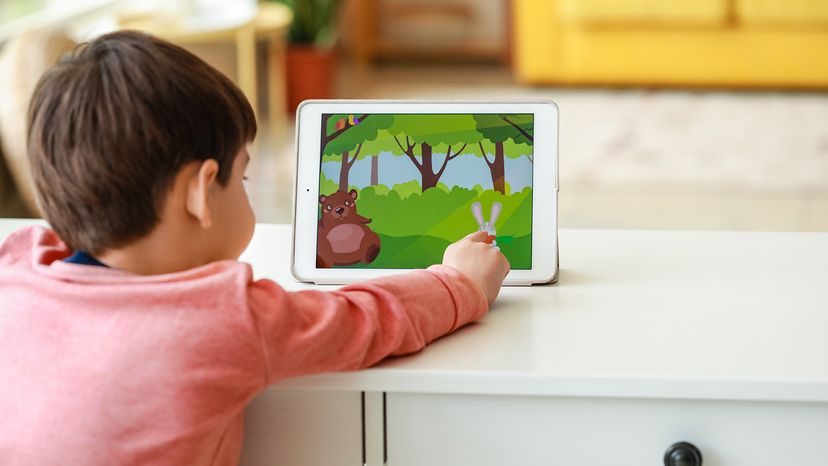

The label stuck early. Only children are often painted as lonely, self-absorbed kids who never learned to share. It’s a persistent cultural script. We imagine them sitting alone at the dinner table, hoarding resources, struggling to connect with peers.
The reality is far less dramatic.
Research consistently shatters the idea that being an only child breeds selfishness. There is no significant difference in altruism or prosocial behavior between singletons and kids with siblings. Some studies even point to higher empathy in only children. Why? They often bond closely with parents early on. They learn to read adult cues. This can sharpen their sensitivity to others’ needs.
Loneliness isn’t a guaranteed outcome either. Sure, they miss out on sibling-specific play. But they build rich networks. Friends. Extended family. Mentors. They form meaningful connections just as effectively as their peers from larger families. Social capability isn’t dictated by birth order. It’s built through interaction.
Parenting quality matters more than family size
The blame often lands on parents. The assumption is that single-child families coddle their kids. Overindulgence. Spoiling. This is the root of the negative stereotype.
But the data doesn’t support this. Parenting styles aren’t inherently different in one-child households. The quality of the parent-child relationship hinges on the caregivers’ personalities and values. Not the number of kids in the house.
In fact, the extra attention only children receive can be a boon. It fosters independence. Creativity. Strong parental bonds. As long as parents maintain a balanced approach, there’s no evidence of inevitable maladjustment. The “spoilage” fear is largely myth.
Social skills develop in diverse settings
Concerns about social deficits are common. Without siblings to negotiate with, how does a child learn to share? To resolve conflict?
They catch up. Quickly.
Once only children enter school, the gap closes. They engage in wider social activities. Peer interaction fills the void. Some research even suggests an advantage. Interacting more with adults can boost communication skills and problem-solving abilities. They develop self-reliance early.
Social development depends on the quality and frequency of interactions. Not family structure. With support and opportunity, only children thrive socially. They navigate interpersonal dynamics just as well as anyone else.
The myth of “Only Child Syndrome” in adulthood
Stereotypes don’t fade with age. They linger. People expect only children to carry their childhood traits into adulthood. Selfishness. Perfectionism. Inability to collaborate.
The evidence refutes this.
The supposed syndrome doesn’t manifest significantly in adult life. It doesn’t dictate well-being or functioning. Traits like independence or a preference for solitude aren’t flaws. They’re assets. They aid academic success. Career advancement. Healthy relationships.
The idea that only children struggle in the workplace is unsupported. Empirical evidence shows they are fully capable of meaningful relationships. Effective collaboration. Navigating professional complexities.
They are just as equipped as their peers. The stigma is outdated. The data is clear.
Debunking the Only Child Syndrome Myth
The idea that being an only child causes psychological damage is less a scientific fact and more a societal hangover. It persists because people love a simple narrative. A broken personality with a clear cause. But the reality is messier. The “only child syndrome” is a myth that has done real damage.
It starts with judgment. People look at a single child and assume they are spoiled. Or lonely. Or socially inept. This isn’t a observation. It is a projection. When you label a child’s behavior as a symptom of their family structure, you ignore the rest of their world. You ignore genetics. You ignore school. You ignore the chaos of modern life.
This stereotype isn’t harmless. It leads to discrimination. In hiring processes, for example, an only child might be unfairly viewed as less team-oriented. In school, teachers might expect them to be more mature than they are. Or less cooperative. The label sticks. And it creates a self-fulfilling prophecy for some.
The Pressure on Family Planning
The myth doesn’t just hurt the kids. It hurts the parents. It creates a sense of guilt that has no basis in evidence.
Some parents feel pressured to have more children than they want or can afford. They fear their single child will be “lonely” or “maladjusted.” So they have a second. Or a third. Maybe not because they are ready. But because they are afraid of what society thinks.
This is a heavy burden. For those who choose to have one child. For those who cannot have more due to medical reasons. Or age. Or finances. The myth suggests their choice is a mistake. It suggests their child is destined for a deficit.
“The only child syndrome is a persistent belief that has significant implications for individuals from single-child families and broader societal attitudes.”
Raising Well-Adjusted Only Children
So how do you raise a healthy, well-adjusted only child? The answer isn’t complicated. It doesn’t require a magic formula. It requires intention.
1. Foster Social Connections Early
If the fear is loneliness, the solution is connection. But not just sibling connection. Peer connection.
– Enroll them in group activities. Sports. Clubs. Arts.
– Encourage playdates. Regularly.
– Teach them how to navigate conflict without a sibling to mediate.
2. Avoid Overindulgence
The “spoiled” stereotype exists for a reason. It’s easy to give an only child everything. Because there’s no one else to share it with.
– Set boundaries. Clear ones.
– Teach delayed gratification.
– Let them experience boredom. It’s good for creativity.
3. Encourage Independence
Only children often spend more time alone. That’s not a bug. It’s a feature.
– Read to them.
– Let them solve problems on their own.
– Don’t rush in to fix every minor issue.
The Bigger Picture
Challenging the only child syndrome myth isn’t just about defending a parenting style. It’s about recognizing diversity. Family structures vary. They always have.
A single-child family is not a deficit. It’s a different configuration. It has its own strengths. Focus. Resources. Attention.
Society needs to stop viewing only children

The idea that being an only child leads to psychological defects or social deficits is largely a myth. Old studies painted a grim picture, but modern research shows that single-child families are just as capable of raising well-adjusted humans as large families. The stereotype of the lonely, spoiled kid doesn’t hold up under scrutiny. Still. parents of one child have specific challenges to navigate. It isn’t about fixing a broken model. It’s about intentional support.
Building Social Skills Deliberately
An only child does not have built-in social training through sibling rivalry or daily negotiation. They don’t wake up to someone else’s mess or have to share a bathroom without asking. This means parents must create those opportunities deliberately.
Playdates are not optional here. They are essential infrastructure for social development. Whether it’s structured extracurriculars or unstructured community programs, peer engagement is non-negotiable for learning how to share. How does a child learn conflict resolution if their only interaction partner is a parent who ultimately yields to keep the peace? They need friction. They need to learn cooperation. They need to understand that other people have needs different from their own.
Countering Entitlement with Empathy
There is a risk of self-centeredness in single-child households. Not because the child is inherently flawed, but because the family dynamic often revolves entirely around them. Resources, attention, and decisions can easily become child-centric by default.
Parents must actively teach altruism. This isn’t a passive process. It requires showing the child that their needs do not always supersede others. It means modeling empathy. When a child sees their parents considering the needs of neighbors, friends, or strangers, they internalize that framework. It counters the potential for entitlement that stems from being the sole focus of parental energy.
Avoiding the Overprotection Trap
Overindulgence is a common trap for parents of only children. Without siblings to moderate behavior or share the burden of discipline, parents can swing too far toward permissiveness. Or they swing the other way toward excessive protection.
Both extremes stifle independence. Setting appropriate boundaries is vital for developing self-worth. An only child needs to learn that they can handle failure. They need to learn that they are capable of solving problems without immediate adult intervention. Fostering this independence builds confidence. It creates a resilient individual who is not reliant on constant external validation or rescue.
Beyond the Stereotype
Family structures are diverse. An only child’s experience is not a monolith. Some are highly independent. Others are deeply social. The outcomes vary as widely as they do in large families.
The old research was flawed. It lacked nuance. It ignored the strength of parent-child bonds. It missed the benefits of focused resources on a single child’s needs. Creativity and independence often flourish in these environments. The key is to stop viewing the single-child household as a deficit model.
We need to approach child development with an open mind. Evidence-based parenting means looking at what actually works. It means supporting children based on their individual needs rather than outdated stereotypes. Whether a family has one child or ten, the goal remains the same. Help them reach their potential.
The conversation is shifting. We are moving past the myths. The focus is now on practical support. It is about giving every child the tools to thrive. The rest is up to the child.


