


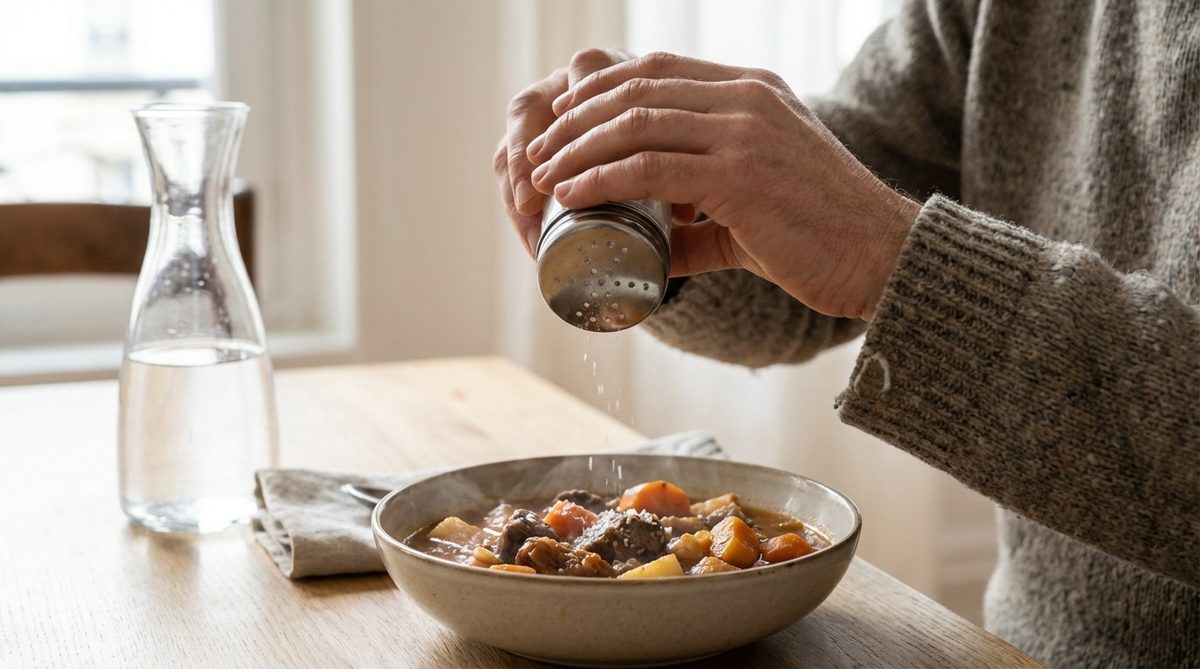
The plate is steaming. Winter vegetables are roasting in the oven or thick soup is boiling on the stove. It smells soothing. February is coming to an end and the light is fading, but the food promises warmth. Sit down. The fork hovers.
Then, without thinking, your hand reaches for the salt shaker.
A short shake. A few white grains fall into the bowl. You haven’t tried a single bite. You didn’t smell the herbs or see the texture. You just salted it. This small, automatic movement seems harmless. It is not. It’s a saboteur. It ruins the nuances of the food. And it goes against your body’s need for balance.
This is not about banning salt. Salt is important. This is all about the reflex to add it before you know what you’re eating. A Pavlovian response that gags the subtle flavors of the season. An act that quietly destroys your efforts to eat healthier.
Ritual before the first bite
Some gestures happen below the level of consciousness. Grabbing a salt shaker before the first spoonful is a ritual, not a necessity. It becomes a mandatory step, like unfolding the napkin. The brain sees the plate and triggers the hand. It bypasses the senses. Analysis is skipped.
This is a conditioned reflex.
It tricks you into thinking your body needs salt now. Thirst has signals. Hunger gives signals. The urge to salt an untouched dish has none. It’s a motor routine. Muscle memory that connects the table to the shaker regardless of the food. Is it a rich dauphinois gratin? Salt it. Is it a crunchy raw vegetable salad? Salt it too.
Here is a false belief. A deeply rooted idea that food becomes boring. That the cook failed. That the food has to be “fixed”. This is a preventative fix. It assumes failure before evidence. Paradoxically, this increases the risk that the dish will be ruined. It takes over the palate in the first seconds. Food is already dead before it is alive in your mouth.
Fear of the neutral plate
Behind the shaking hand lies modern fear. Fear of boredom. Of a “neutral” plate.
We live in a world of highly processed foods. These products educate the palate with an explosion of artificial flavors. Saturated. Intense. When returning to a natural diet, the lack of noise can be a concern. The taste of carrots may seem bland. Or worse, flat.
This fear pushes us towards immediate stimulation. We don’t want to find flavor. We want to find a known anchor. Salt is the anchor. It provides a reference point for comfort.
But we confuse enhancing with masking.
Sparingly used salt makes the tomato sing. It accentuates the sweetness of the pumpkin. It brings out the woodiness of the mushrooms. But when used blindly and excessively, it acts like a blindfold. It imposes uniformity. Leeks no longer taste like leeks. A potato no longer tastes like a potato. It tastes like salt.
The pursuit of intensity makes every meal monotonous. The diversity of the terroir disappears behind the standardized salt barrier. You don’t eat the vegetables. You are eating the salt that covers it.
Your taste buds are on strike
The tragedy of this automatic gesture is physiological. It changes your taste.
Taste is a precision instrument. It adapts. But it also dulls. Bombarding the tongue with salt crystals before tasting triggers a vicious cycle of tolerance. The more salt you consume, the less you notice it. Taste receptors become saturated. They need larger doses to send the same satisfaction signal to the brain.
What seemed tasty yesterday tastes boring today. So the hand shakes more.
This sensory escalation blinds you to natural subtleties. Winter vegetables are complicated. Parsnip has a hazelnut note. Carrots have sweetness. Beetroot has an earthy note. A salt-saturated palate becomes blind to these details. It is partial anesthesia. It robs you of the true richness of the meal.
Relearning to eat less salty food is not a diet. It’s rehabilitation. It allows your taste buds to end their forced strike. It helps you rediscover that a ripe tomato has its own personality. That celery has its own voice. They often need nothing but themselves.
However, we keep shaking. We keep covering the noise with more noise.
The question is not whether salt is bad. It’s all about whether you’re willing to hear what the food is really saying. Or do you continue to drown it out.
Why a table shaker sabotages heart health
This extra pinch of salt is easy to keep harmless. Just a few grams. But adding it to every meal changes the math. Most sodium is already hidden in processed foods such as bread, cheese and deli meats. The salt shaker on the table is overflowing. It is uncontrolled input. The body has to work harder to flush it out.
Cumulative damage directly affects the cardiovascular system. Salt acts like a sponge. It draws water into the tissue. This increases blood volume. The heart has to pump against the higher pressure in the arteries. Winter makes the situation even worse. Then we are less active. Overloading the system with this automatic gesture is counter-productive. It negates the effort to eat well.
Disrespect to the chef
There is a social cost to this habit too. Seasoning food before tasting is against etiquette. It is a slight against the cook. Whether it’s a chef or a family member, the message is clear. I don’t trust your abilities. It requires incompetence before giving the court a chance to shine.
It ruins the balance of flavors. Cooking is chemistry. It balances acidity, bitterness, sweetness, saltiness and umami. A slow-cooked stew concentrates the juices. The broth could be based on fresh herbs. Adding salt blindly destroys this harmony. It drowns out the citrus scents. It covers the creaminess. It reduces a complex dish to a single salty note.
Breaking the Habit with the Rule of Three
How do you stop? Start with the Three Bite Rule. Don’t touch the salt shaker until you’ve had three different bites. The first bite cleanses the palate. The second allows you to analyze the flavors. The third confirms the judgment. The desire for salt often disappears. The brain registers other aromas.
Replace salt with other enhancers. Use spices, herbs and acid. Lemon juice awakens the taste buds. Black pepper adds spiciness. Cumin or fresh coriander adds depth. Roasting concentrates the natural sugars. You can enjoy food without a high sodium load.
Roasted butternut squash velouté with Spice Chips
This recipe uses the whole squash. Roasting concentrates the natural sweetness. It makes added salt unnecessary.
Ingredients:
- 1 medium pumpkin (preferably organic)
- 1 large yellow onion
- 2 cloves of garlic
- 1 teaspoon cumin powder
- 1 teaspoon of turmeric
- 1/2 teaspoon of smoked paprika powder
- 3 tablespoons of olive oil
- 750 ml vegetable broth (homemade or low sodium)
- Fresh ground black pepper
- Pumpkin seeds for serving
Preparation:
Heat the oven to 200°C. Wash the pumpkin thoroughly; you will use the skin. Peel the pumpkin into long strips using a vegetable peeler. Save the peels. Cut the flesh into rough chunks. Remove the seeds. For a snack, you can wash and roast the seeds separately.
Put the pumpkin cubes, onion quarters and whole garlic cloves on a baking sheet. Drizzle two tablespoons of olive oil on top. Sprinkle cumin, turmeric and paprika on top. Toss by hand to coat every piece. Roast for 30 to 40 minutes until tender and slightly caramelized.
While the vegetables are roasting, put the squash peels in a bowl. Add the last tablespoon of oil and a pinch of pepper. Spread them on another baking sheet. Bake for 10-15 minutes until they are crispy like chips.
Once the vegetables are roasted, squeeze the garlic cloves to extract the pulp. Add the squash, onion, and garlic pulp to a blender. Slowly add the hot vegetable broth while blending. Stop when you have reached the desired consistency. Taste it. Spices and caramelization give enough flavor. Serve hot and topped with the crispy squash skin chips for texture.
Quitting this table habit changes more than your palate. It’s about taking back control. It honors the food. It respects the person who made it. The body follows suit as the sodium load decreases. The heart pumps more easily. The water balance stabilizes. You start to taste what’s really there.


