


The recent news cycle has been dominated by anthrax. Naturally, that has put Cipro in the spotlight. Bayer calls it Cipro. The generic name is ciprofloxacin. It is one of the few antibiotics proven effective against the Bacillus anthracis bacteria.
We need to look at how this drug actually works. Not just that it works. But the mechanism. Specifically, how it interferes with bacterial DNA.
The Role of Enzymes in Bacterial Replication
Bacteria are simple organisms. They replicate by copying their DNA. This process relies on specific enzymes. These enzymes act like molecular scissors. They cut and paste genetic material.
Ciprofloxacin targets two of these enzymes. DNA gyrase and topoisomerase IV. These are essential for bacterial survival. Without them, the bacteria cannot divide.
The drug binds to these enzymes. It prevents them from functioning. The bacterial DNA becomes tangled. It cannot unwind. The cell cannot replicate.
Why Cipro is Effective Against Anthrax
Anthrax is a serious infection. It can be fatal if untreated. Early treatment is key. Ciprofloxacin works quickly. It stops the bacteria from multiplying.
This makes it a first-line defense. Health officials recommend it for post-exposure prophylaxis. It is also used for treatment. The key is timing. Start early.
Other antibiotics exist. But ciprofloxacin has a strong track record. It penetrates tissues well. It reaches high concentrations in the blood. This is important for fighting systemic infections.
Resistance and Alternatives
Bacteria can develop resistance. This is a concern with any antibiotic. Overuse leads to stronger strains. We must use these drugs wisely.
If ciprofloxacin fails, other options exist. Doxycycline is a common alternative. Levofloxacin is another fluoroquinolone. These drugs share similar mechanisms. But they are not identical.
Doctors choose based on specific cases. Patient history matters. Drug interactions matter. Side effects matter.
The Bottom Line
Ciprofloxacin is a powerful tool. It targets bacterial DNA. It stops replication. It is effective against anthrax. But it is not a magic bullet. Use it correctly. Trust medical guidance. The news cycle changes. The science remains constant.
“Ciprofloxacin targets essential bacterial enzymes, preventing DNA replication and effectively halting anthrax progression when administered early.”
The debate continues. Should we stockpile these drugs? Should we use them preemptively? The answers are complex. They involve ethics, logistics, and biology. One thing is clear. We need to understand how these drugs work. Knowledge reduces fear. It guides better decisions.
What happens if the bacteria adapt? Evolution does not stop for our convenience. Research continues. New drugs are developed. But for now, ciprofloxacin remains a cornerstone of defense. Keep up with the science. Stay informed. And remember, antibiotics are not candy. Use them with care.

Skip this if you already know your way around a bacterial cell. If you’ve read How Cells Work, you know the basics. Let’s do a quick recap so the rest of this makes sense. We’ll use E. coli as our model, since it’s the workhorse of microbiology.
An E. coli cell is tiny. About one-hundredth the size of a human cell. Imagine a microscopic plastic bag—the cell wall—filled with water. Inside that water float enzymes, proteins, and a long, coiled strand of DNA.
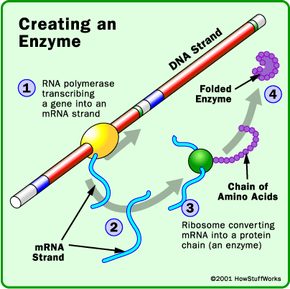
That DNA holds about four million base pairs. They’re organized into roughly 1,000 genes. A gene is just a blueprint. It tells the cell how to build a protein. Often, that protein is an enzyme.
Enzymes are the workers. They speed up chemical reactions. Take maltose, a simple sugar. One specific enzyme in E. coli knows how to split a maltose molecule into two glucose molecules. That’s its job. Once the glucose is free, other enzymes turn it into energy. The cell needs these enzymes to digest food, repair its wall, copy its DNA, and survive. Some enzymes exist in thousands of copies. Others, just a few. This chemical soup is what keeps the bacterium alive. It senses. It moves. It eats. It reproduces.
To make a needed enzyme, the cell copies a section of DNA—a gene—and uses it as a template. The DNA holds the instructions for all 1,000 enzymes. The gene tells the cell how to manufacture one specific enzyme. Once built, the enzyme floats free and does its work. DNA creates enzymes. Enzymes drive life.
The Logic Behind Antibiotics
Bacterial survival depends on that rich mix of enzymes floating in the cytoplasm.
An antibiotic is a poison designed to kill bacteria while sparing human cells. It works by exploiting the differences between bacterial enzymes and human ones. If a toxin targets a bacterial enzyme that humans simply don’t have, you’ve got an antibiotic.
Streptomycin is one example. It jams the ribosome in bacteria. Ribosomes are large enzymes that translate DNA info into new proteins. Human ribosomes look different. Streptomycin ignores them.
Penicillin was among the first. It blocks bacteria from building cell walls. Human cells don’t have cell walls like bacteria do. So penicillin cripples certain bacteria but leaves us alone. Sulfa drugs disable an enzyme involved in making nucleotides in bacteria. Humans get nucleotides elsewhere. No nucleotides means no reproduction for the bug.
Antibiotics only hit living cells. Bacteria are living. Viruses are not. Antibiotics do nothing against viruses.
Finding new antibiotics is a hunt. Scientists look for differences between human and bacterial enzymes. They want to find a bacterial enzyme that, if stopped, kills the bug but leaves the host intact.
But there’s a catch. Antibiotics lose effectiveness over time. Bacteria reproduce fast. Fast reproduction means high mutation rates. Your body might harbor millions of bacteria. An antibiotic kills most of them. But if one has a mutation that confers immunity, that one survives. It reproduces. It spreads. Most bacterial diseases now resist some antibiotics because of this natural selection.
How Cipro Targets DNA Replication
Ciprofloxacin, often just called Cipro, works differently than penicillin or streptomycin. It doesn’t attack the cell wall. It doesn’t jam the ribosome. It targets the machinery that copies DNA.
Every time a bacterium divides, it must copy its genetic code. This process requires specific enzymes called DNA gyrase and topoisomerase IV. These enzymes unwind the DNA helix so the copying machinery can access the strands. Without them, the DNA stays tangled. The cell can’t replicate.
Cipro binds to these enzymes. It locks them in place. The DNA cannot unwind. The copying process halts. The bacterium cannot divide. It’s essentially locked out of its own genetic library.
Human cells have similar enzymes, but they are structurally distinct. Cipro fits the bacterial versions like a key in a lock. It doesn’t fit the human ones. That’s why it’s toxic to the bacteria but relatively safe for us.
This specificity is why Cipro is effective against a broad range of Gram-negative and some Gram-positive bacteria. It’s a potent tool. But like all antibiotics, resistance is a constant threat. If a bacterium mutates its gyrase or topoisomerase so Cipro no longer fits, the drug stops working. The bacteria survives. It reproduces. And the cycle begins again.
The question isn’t just how Cipro works. It’s how long it will keep working.
The chemistry is elegant. The biology is ruthless. We rely on these differences to stay healthy while the bugs die. But the bugs are adaptable. They evolve. We invent. They adapt. The gap between them is narrow. It’s getting narrower.
“The search for new antibiotics occurs down at the enzyme level, hunting for differences between the enzymes in human and bacterial cells.”
Cipro is a weapon in that hunt. A powerful one. But weapons lose their edge when the enemy changes its armor. We need better armor. Or new weapons. The science is there. The application is the challenge.
What happens when the next mutation makes Cipro obsolete? We don’t have a simple answer. Just more research. More caution. And a deeper respect for the tiny, floating enzymes that keep us both alive and at war.

Ciprofloxacin, often known simply as Cipro, is a broad-spectrum antibiotic. It is not just a tool for treating common ailments like bronchitis or gonorrhea. It also kills E. coli and, notably, the bacteria that cause anthrax.
But how does it actually kill them?
The answer lies in the cellular machinery of the bug itself. According to Bayer, the manufacturer, Cipro works by inhibiting bacterial nuclear DNA synthesis. The bacteria die rapidly.
The Target: Topoisomerase II
Inside every bacterial cell, including anthrax and E. coli, there is an enzyme called topoisomerase II. Scientists also refer to this enzyme as DNA gyrase.
Its job is mechanical. DNA strands are long. They need to fit inside a tiny cell. Topoisomerase II handles the supercoiling and uncoiling of that DNA.
- Supercoiling packs the DNA tight so it fits.
- Uncoiling is the first step for replication. It allows the cell to read its genetic code.
Cipro blocks this enzyme. It stops topoisomerase II from doing its job.
Without this enzyme, the bacterial cell cannot uncoil its DNA. It cannot create necessary enzymes. It cannot reproduce. Prolonged inhibition leads to cell death.
Resistance and Soviet Reports
There are reports suggesting Soviet scientists created antibiotic-resistant strains of anthrax.
How would you test for resistance?
You grow large quantities of anthrax. You treat it with Cipro. You see which cells survive. Then you let those survivors reproduce. The next generation carries resistance.
The catch? These resistant cells are not immune to other antibiotics. They only resist Cipro. If another drug works against anthrax, it might still kill them.
Further Reading
For more information on Cipro, anthrax, and related topics, check out the links on the next page.
Related HowStuffWorks Articles
- How Anthrax Works
- How Cells Work
- How Viruses Work
- Where do the names for prescription drugs come from?
- How do antibiotics work?
- How Biological and Chemical Warfare Works
More Great Links!
- Medline Plus Drug Information
- CDC: Anthrax
- Liver & Drug Interaction
- Cipro Information and Side Effects
- Clinically Significant Drug Interactions


