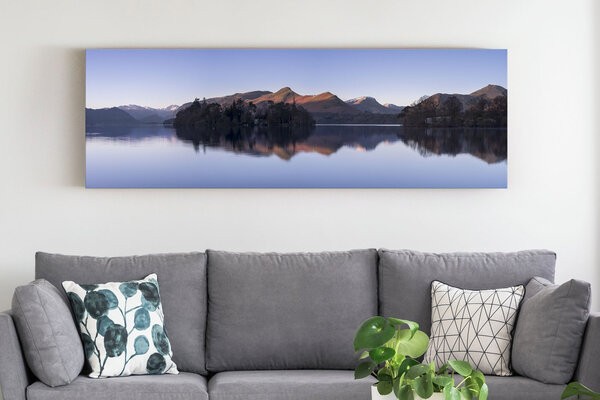
Most people focus on diet, exercise, and sleep when improving their health. However, the visual environment we return to daily—particularly the art in our living rooms—subtly but powerfully impacts our wellbeing.
Why Your Surroundings Matter
We spend significant time indoors, especially in communal spaces like the living room. This area serves as a transition between work, family life, and relaxation. As such, what surrounds us matters more than we might think. The images on our walls aren’t neutral; they shape the atmosphere, influence mood, and quietly affect how we feel.
The Psychology of Visual Rest
Environmental psychology shows that repeated exposure to certain imagery influences our emotional baseline. Natural landscapes, water scenes, and open horizons are linked to reduced stress and improved mood. This is because these visuals offer attention restoration : gentle, absorbing imagery allows the brain to recover from cognitive fatigue.
Unlike chaotic or overstimulating images, calming visuals don’t demand intense interpretation. A seascape or misty woodland provides “visual breathing space.” Color also plays a role; cooler tones like blues and greens promote calm, while softer neutrals create balance. Bold art isn’t harmful, but composition and color matter if the goal is a restorative environment.
The Living Room’s Outsized Impact
The living room is usually the largest communal space, making it disproportionately influential. A visually noisy room can prolong the stress of the outside world, while thoughtfully chosen artwork supports a slower, calmer rhythm. A single large-scale print with depth can ground the space instead of fragmenting it.
Scale matters: multiple small frames can feel chaotic, while a carefully selected piece with space and balance feels more settled.
Nature’s “Soft Fascination”
Research consistently shows nature’s restorative effect. Even images of natural environments evoke similar benefits through soft fascination —the mind is gently engaged without strain. Photography is particularly effective because it captures real places and light, creating a sense of presence. A coastal image with a distant horizon introduces openness, while a woodland scene adds depth.
This isn’t about themed spaces; it’s about subtle cues suggesting distance, stillness, or natural light.
Intentional Curation, Not Filler
Many people choose art as an afterthought. But when selected intentionally, artwork becomes part of the room’s emotional architecture. Ask yourself: Does this image feel calming? Does it give my eye somewhere to rest? Does it complement existing tones?
Many galleries curate collections for living rooms, making exploration easier. The key is alignment between the artwork and the atmosphere you want to create, not the brand or price.
Simple Steps for a Restorative Space
To support wellbeing through art:
- Choose imagery with visual depth (open skies, water, landscapes).
- Avoid busy compositions if seeking calm.
- Position artwork at eye level for balance.
- Match tones to existing furnishings to reduce contrast.
- Opt for one strong focal piece instead of several competing ones.
The Quiet Power of Art
Wellbeing isn’t about dramatic changes; it’s shaped by small, consistent influences. The light, sound, furniture, and the images we live with every day all contribute. Your living room is where you reset. If the artwork supports calm, balance, and space, it may be doing more for your wellbeing than you realize.