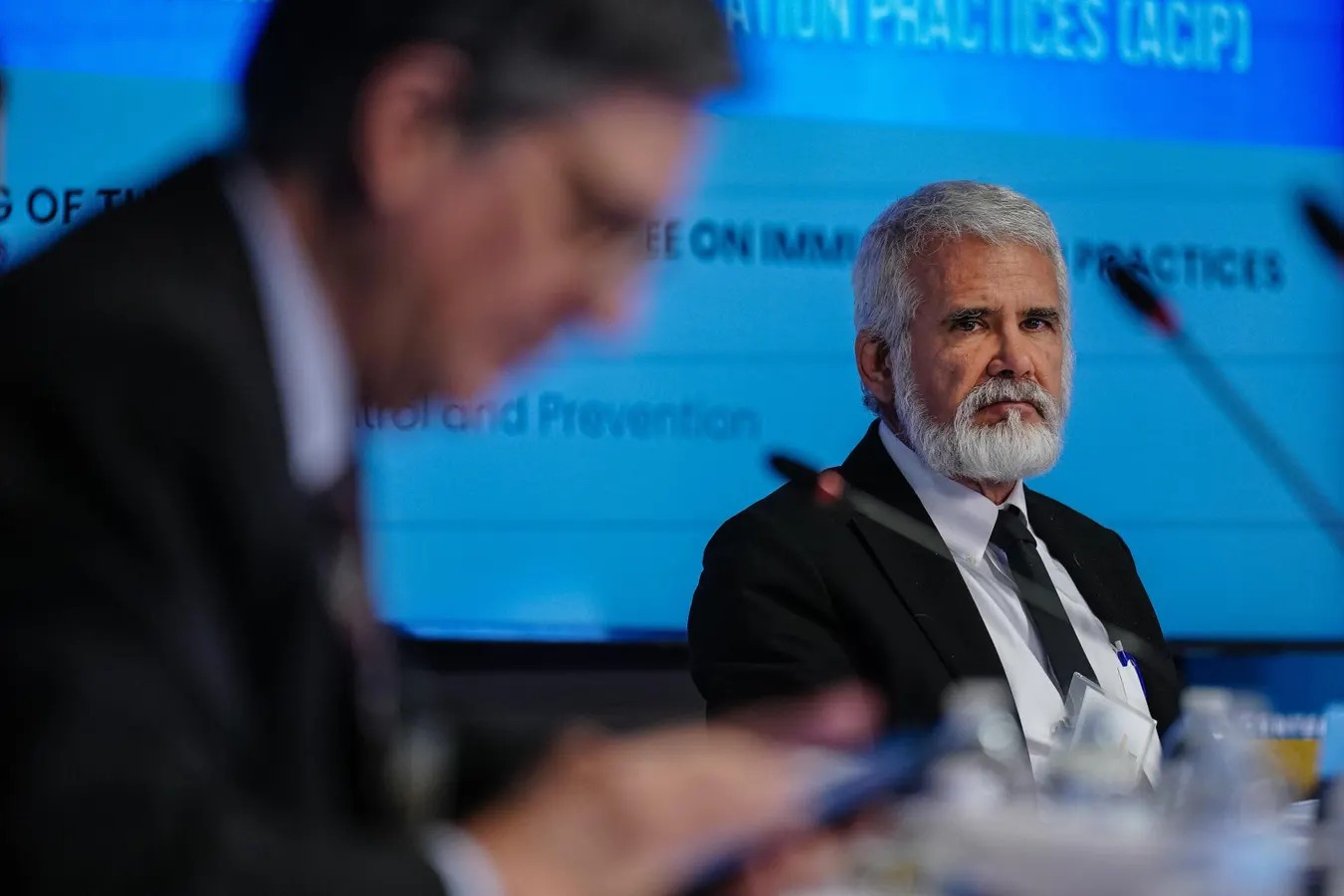
The newly appointed chair of the Centers for Disease Control and Prevention’s (CDC) vaccine advisory panel, Dr. Kirk Milhoan, has publicly questioned the necessity of widespread vaccine recommendations, including those for polio and other childhood diseases. His comments, made during a podcast appearance, suggest a shift toward prioritizing individual choice over established public health guidelines – a stance that could have dangerous consequences for the United States.
The Power of Vaccine Guidance
The CDC’s Advisory Committee on Immunization Practices (ACIP) doesn’t just offer advice; it shapes national vaccine policy. Its recommendations directly influence insurance coverage and state laws regarding mandatory vaccinations, making its decisions critical for public health. Dr. Milhoan’s questioning of these policies signals a potential erosion of evidence-based vaccine guidance.
Vaccination: Not Just an Individual Choice
The decision to vaccinate isn’t comparable to choosing between medications for a chronic condition like diabetes. While a patient’s drug selection impacts only themselves, vaccine decisions have broader implications. Vaccines create herd immunity, protecting entire communities by slowing or stopping disease spread. For example, the U.S. has already seen 416 measles cases this year, with the vast majority occurring in unvaccinated individuals and low-vaccination communities. Reaching a 95% vaccination rate is essential to prevent outbreaks.
Protecting the Most Vulnerable
Dr. Milhoan’s emphasis on personal freedom overlooks a critical point: vaccines safeguard those who cannot protect themselves. Infants, immunocompromised patients, and individuals undergoing treatments like chemotherapy rely on herd immunity to survive. Weakening vaccination rates will expose these vulnerable groups to preventable, deadly diseases like polio and measles.
The Balance Between Liberty and Responsibility
The argument for personal choice ignores the reality of infectious disease transmission. An unvaccinated person can trigger outbreaks that endanger entire communities. This dynamic is similar to public health measures like smoking bans, which restrict individual behavior to protect bystanders from secondhand smoke. Vaccines, like smoking restrictions, save lives; the World Health Organization estimates that global immunization has saved at least 154 million lives.
The Return of Preventable Diseases
Weakening vaccine recommendations will inevitably lead to declining vaccination rates and the resurgence of previously controlled diseases. Before widespread vaccination, polio paralyzed 15,000 children annually in the U.S. There is no cure for polio, and prevention relies entirely on vaccination. Removing polio from the childhood vaccine schedule could bring this deadly disease back to America, where up to 10% of those paralyzed by the virus die from complications.
The U.S. has historically based its vaccine policies on scientific consensus. Abandoning that approach risks reversing decades of progress and endangering public health.