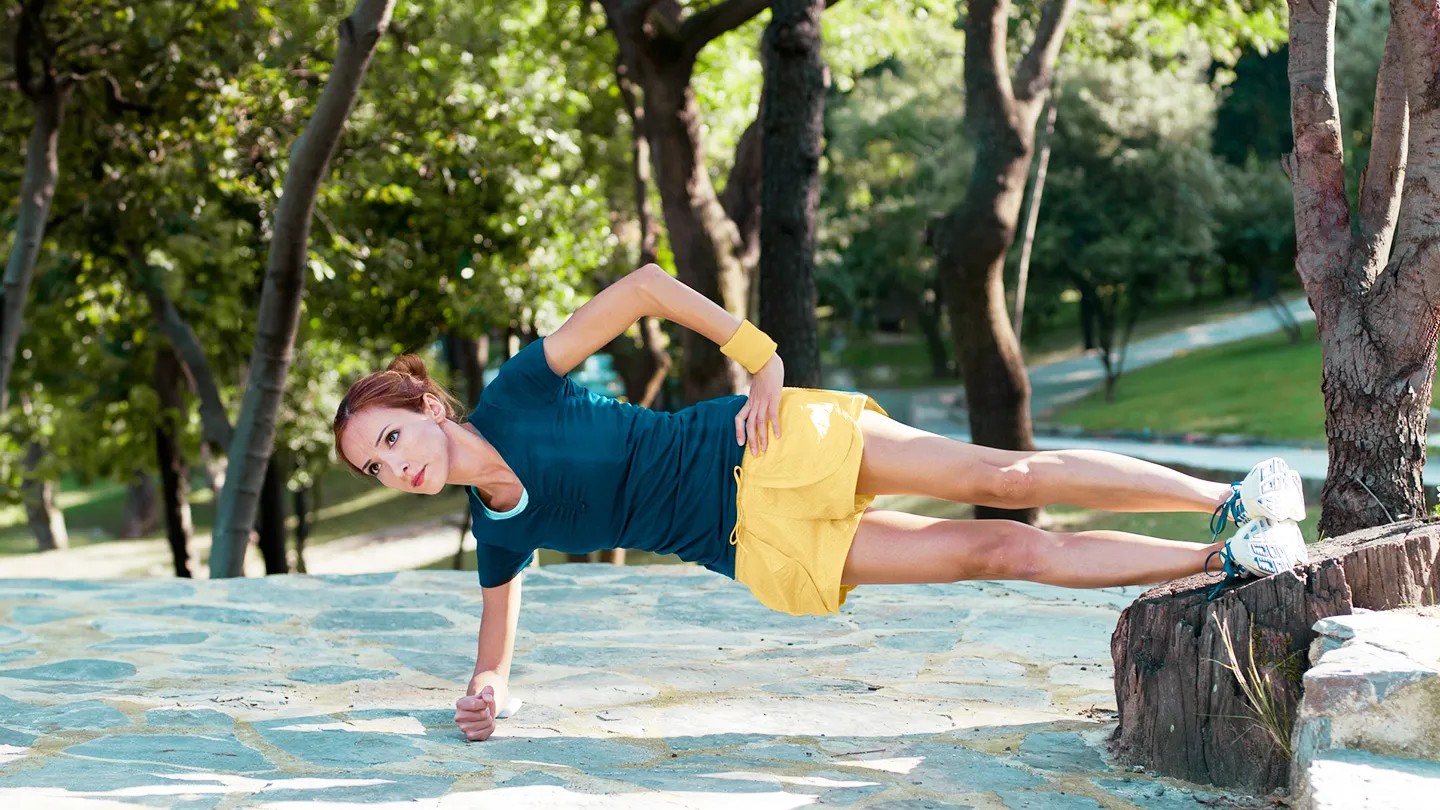
The Copenhagen plank is an advanced variation of the side plank, gaining popularity among athletes and fitness enthusiasts for its unique benefits. While standard side planks strengthen core muscles, the Copenhagen plank adds a single-leg elevation, intensifying the challenge and targeting additional muscle groups essential for athletic performance and injury prevention.
Why It Matters: Beyond Basic Core Work
Traditional planks build a solid foundation, but the Copenhagen plank takes core training to the next level. This isn’t just about aesthetics; it’s about functional strength – the kind that translates to better balance, stability, and reduced injury risk in real-world movements. The single-leg position forces your core and hips to work harder, building resilience that standard planks may miss.
How It Works: A Deeper Muscle Engagement
Named after the Danish soccer team FC Copenhagen, who popularized the exercise, the Copenhagen plank uniquely stresses the entire core—including the rectus abdominus, obliques, transverse abdominus, pelvic floor, and lower back—along with the often-overlooked adductors (inner thigh muscles). This combination enhances lateral stability, crucial for sports and everyday activities like carrying groceries or quick changes of direction.
Key Benefits:
- Enhanced Hip Strength: The elevated leg dramatically increases demand on hip adductors, reducing the risk of groin injuries. A study of Norwegian semiprofessional football teams showed an 8% lower incidence of groin injuries among those who performed the Copenhagen plank regularly.
- Strengthened Core: The unilateral (one-sided) nature of the exercise generates higher muscle activation in the core compared to standard planks, improving stability and reducing lower back pain.
- Improved Shoulder Health: The supporting arm activates upper back and shoulder muscles, enhancing stability and protecting against age-related decline and potential injuries.
Performing the Copenhagen Plank: Step-by-Step
- Lie on your side with your bottom forearm and hand firmly on the ground, elbow directly under your shoulder. Extend both legs.
- Place the side of your top foot onto a sturdy box or bench.
- Press into the surface and lift your hips off the ground, forming a straight line from head to toe.
- Lift the bottom foot off the ground, hovering it a few inches below the top foot.
- Gaze forward while maintaining a stable position.
Start with 30-second holds or 10 repetitions per side, gradually increasing the duration as you get stronger.
Common Mistakes to Avoid:
- Sagging Hips: Indicates weak hip adductors and core; adjust by sliding more of your top leg onto the support.
- Torso Rotation: Suggests insufficient core and shoulder strength; revert to a standard side plank to build foundational strength before attempting the Copenhagen plank again.
Modifications and Precautions
If you have cardiovascular issues, musculoskeletal pain, or injuries, consult your doctor before attempting this exercise. For beginners or those with limitations, start with a modified version: bend your top leg and place your knee on the bench instead of your foot. Progress gradually as strength improves.
The Bottom Line
The Copenhagen plank is a powerful tool for improving core strength, stability, and injury prevention. It’s an advanced exercise that demands proper form and gradual progression. If you’re looking to push your core training to the next level, the Copenhagen plank is worth considering.