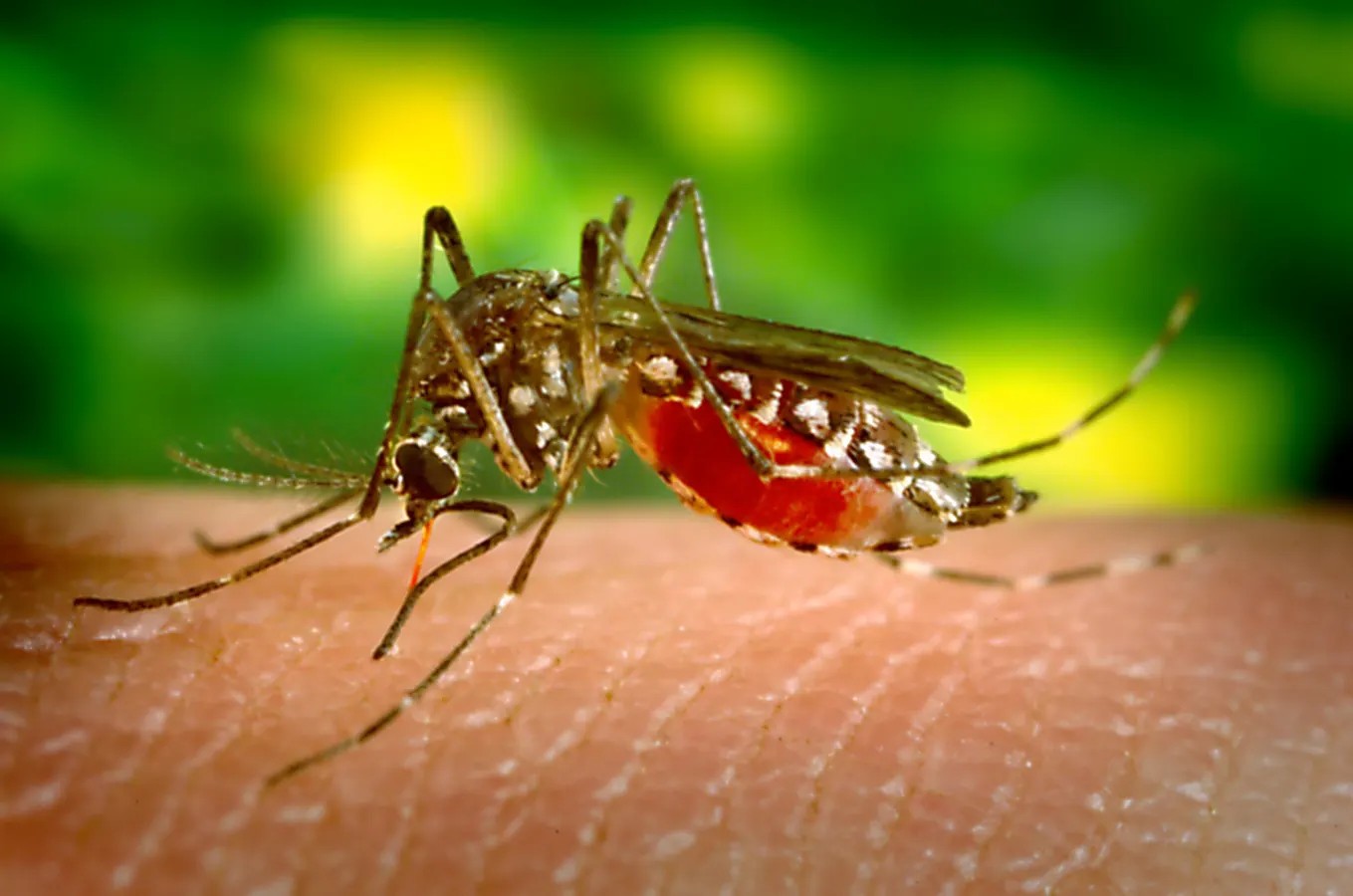
Mosquitoes don’t care about borders. They certainly don’t read travel advisories.
For a hundred years, we treated diseases like dengue, malaria, and yellow fever as distant problems. Stuff for the tropics. Stuff that stayed in the tropics. Not the continental US. Not for us.
That bubble popped over a decade ago in Florida.
Then 2023 hit. Local malaria cases in Texas. Florida again. And now, a new paper in Emerging Infectious Diseases points to something bigger happening right in Los Angeles. A seven-week chain of sustained transmission in LA County. The most telling data point we’ve had in a long time.
The LA Spike
Fall of 2024 brought fourteen confirmed cases of dengue to LA County.
Fourteen.
Sounds small? It isn’t. Eight of those cases clustered tight, all within a mile in the San Gabriel Valley. That’s local spread. The other six scattered across neighborhoods more than twenty miles apart. Each one likely a traveler coming home, dropping a virus into a new zip code.
We sit on an edge.
The southern US has the mosquitoes. The warmth returns each summer. Travelers come in with infected blood regularly. But usually, conditions are just barely not enough to sustain the fire. The flame flickers and dies. The LA outbreak? That’s what happens when the margin tilts. Even for a short time.
Seven Weeks Of Relay
Dengue needs a hand-off.
Mosquito bites infected human. Virus grows inside bug for eight to twelve days. Mosquito bites new person. New person incubates virus for five to seven days. Then they bite a mosquito. One full loop takes weeks.
Seven weeks?
That’s two full loops. Maybe three.
“About three-quarters of dengue infections produce no or mild symptoms.”
The fourteen people we know about are the tip of the iceberg. Most infected folks don’t feel sick. Or they feel just fine. Dozens likely got infected in those weeks and never knew. Never tested. Never counted.
Sparks And Dry Grass
Why now? Why LA?
LA recorded 222 travel-linked dengue cases in 2024 alone. Think about the jump: 35 cases in 2022. 75 in 2033.
Thirteen million cases globally.
Every traveler with active viremia in their blood is a spark. 222 sparks in a county full of Ae. aegypti mosquitoes—the kind that likes human blood—waiting since 2013. It’s a statistical inevitability that one of those sparks would catch.
Global becomes local fast.
This wasn’t a failure of local mosquito control. It was a collision course. Other parts of the world burned hot. People came home. The vectors were ready. Look at the Hondius cruise ship. Pathogens move at airline speeds. Climate change just widens the runway for both the mosquitoes in our backyard and the outbreaks in distant cities feeding the influx.
Crossing The Threshold
Here’s the trap.
Below the threshold? An infection dies. The math saves you. Public health can sleep at night. Above it? Every infection creates more. The burden multiplies. You need faster testing. Aggressive spraying. Better surveillance. It costs a fortune to fix what prevention handled cheaply.
Florida learned this the hard way. Key West sparked it in 2009Miami picked it up by the early 2010s. By 2023 they had 60 cases. They had to invest. Hard. In labs. In nets. In teams.
California is early. Much earlier.
The LA study showed the median delay from symptoms to a dengue test: 10 days. A whole ten days.
One person got diagnosed with West Nile first. Four were found only because teams went door to door. The medical system didn’t see it. A doctor had to guess. In a non-endemic area, no one thinks dengue first.
The Cold Pause
What stopped LA?
Cold weather.
The mosquitoes went dormant in late October, and the case count flatlined. The chain broke because nature pulled the plug, not because human intervention snapped it shut. The county did 318 household surveys. Nine field ops. Multilingual alerts.
Was that enough?
Maybe. Maybe not. We might never know if the chain broke on its own. The season ended first.
Climate change lengthens the season. The global burden rises. Introduction pressure keeps climbing. These forces push our systems harder. They inch closer to the red line. It’s almost always cheaper to keep the fire out than to burn your house down to find the water. 🌡️🦟